World War II Historical Fiction Books From Around the World
When we think about World War II historical fiction, we often think about Nazi Germany, the Holocaust and occupied France. But what about the experiences of people living in Malaysia, Hong Kong, Thailand, Korea or Burma?
One of the things I love most about reading historical fiction is discovering parts of history I never learnt about at school. Growing up in Britain, much of my history education focused on Germany, Britain and France. It wasn’t until I started reading more widely that I began to understand just how global World War II really was.
For this list, I’ve chosen 21 books exploring World War II from different perspectives and parts of the world. Some were written by authors who lived through the war, while others look back at events from a more recent perspective. They explore everything from resistance and occupation to colonialism, friendship, love and the long-lasting consequences of war.
I’ve also included some shorter books suitable for younger readers, alongside more challenging literary fiction. There’s even one book that’s closer to a memoir, but I felt it was too important to leave out.
Alone in Berlin by Hans Fallada
I read Alone in Berlin quite some time ago, but it’s one of those books that has absolutely stayed with me.
Based on a true story, it follows a German couple who resist the Nazis by secretly leaving anti-Nazi postcards around Berlin. These seemingly small acts of resistance were incredibly dangerous, especially in a society where surveillance, fear and suspicion were part of everyday life.
The novel reads almost like a thriller in places, but what makes it so powerful is its exploration of ordinary Germans living under Hitler’s dictatorship. People were terrified for their families, neighbours were reporting on one another, and survival sometimes meant making decisions that went against everything you believed in.
Hans Fallada himself lived through Nazi Germany, which makes the novel particularly interesting.
This is certainly not a happy read, but I highly recommend it if you’re interested in understanding the experience of ordinary German citizens living under Nazi rule.
All the Light We Cannot See by Anthony Doerr
If you’re new to World War II historical fiction, All the Light We Cannot See could be a good place to start.
Much of the novel takes place in occupied France and follows two young characters whose experiences of the war are very different. One is a blind French girl who relies on her other senses to navigate the world, while the other is a young German whose life becomes increasingly entangled with the war.
What I found interesting was how the novel explores the impossible decisions ordinary people faced. What happens when your values conflict with what you’re ordered to do? Is doing the right thing worth risking your life?
There’s also a storyline involving something valuable that adds an element of mystery and makes it feel more like a traditional novel.
Compared with something like Alone in Berlin, I found this a more accessible introduction to World War II fiction, although it still raises plenty of difficult questions.
There’s also a Netflix adaptation, which I hadn’t watched when I discussed this book. I’d be interested to know whether it’s worth watching.
Captain Corelli’s Mandolin by Louis de Bernières
I think I first read Captain Corelli’s Mandolin as a teenager, and it’s actually the book that made me want to visit Greece.
It also introduced me to an area of World War II history that I knew very little about.
Set on a Greek island, the novel explores the Italian and German occupations of Greece, including the shifting alliances and betrayals between occupying forces. Italy was under Mussolini’s fascist dictatorship, and the relationship between the Italians, Germans and Greeks creates much of the novel’s tension.
Although there’s a love story at its centre, I certainly wouldn’t describe this as a lighthearted book. There are some extremely sad, traumatic and violent moments.
One of the themes that really interested me was the idea of loving someone who is supposed to be your enemy simply because your countries are at war.
It also explores how people continue living with the consequences of their wartime actions long after the fighting has ended.
This is one of those historical novels that taught me a huge amount about a part of Europe I hadn’t really encountered in my history lessons.
The Piano Teacher by Janice Y. K. Lee
The Piano Teacher really opened my eyes to the Asian experience of World War II.
Set in Hong Kong, the novel explores the lives of different communities during the Japanese occupation of the British colony.
There are British expatriates, wealthy families and people with connections to different parts of Asia. As the Japanese invade, their relationships and loyalties become increasingly complicated.
One of the biggest questions running through the novel is collaboration versus resistance. Why do some people cooperate with occupying forces? Is it because they’re frightened, because they want to survive, or because there’s something to gain?
I also found the questions about nationality and identity fascinating.
Living in Thailand and teaching students who have grown up between different cultures, I’m particularly interested in what makes someone feel connected to a country. Is it where you’re born, where you live, or where your family comes from?
Some of the characters are quite morally questionable, and I found parts of their stories a little unsatisfactory. But I think that’s partly the point. They’re all trying to get what they want, whether that’s security, money or political influence.
I really enjoyed this novel, particularly for the way it challenged my understanding of Hong Kong during the war.
The Gift of Rain by Tan Twan Eng
I absolutely loved The Gift of Rain.
Set in Penang, Malaysia, it follows a young man of mixed British and Chinese heritage who develops a close relationship with a Japanese man who becomes something of a teacher to him.
When war arrives, their relationship becomes incredibly complicated as they find themselves on opposing sides.
It’s another novel that explores loyalty, betrayal and the difficult decisions people make under occupation. To what extent should we judge someone as an individual rather than by the country they come from? And what happens when personal relationships conflict with national loyalties?
I’ve visited Penang many times, so I particularly enjoyed recognising places mentioned in the novel, including historical sites I’d visited myself.
Much of what I learnt about the Japanese occupation of Malaya came from reading books like this rather than studying history at school.
If you’re looking for World War II historical fiction set in Southeast Asia, this would be one of my strongest recommendations.
The Narrow Road to the Deep North by Richard Flanagan
I wasn’t sure whether I would enjoy The Narrow Road to the Deep North when I first picked it up. At the time, I was particularly interested in reading books by Thai authors, and although much of this novel takes place in Thailand, Richard Flanagan is Australian.
However, I ended up learning an enormous amount from it.
The novel explores the horrific experiences of prisoners of war forced to work on the Thailand-Burma Railway, commonly known as the Death Railway.
Flanagan’s own father was a prisoner of war who worked on the railway, giving the novel an important personal connection to the history it depicts.
I’ve visited the Death Railway area in Kanchanaburi, Thailand, including the memorial museum, and learning about what happened there was incredibly moving.
One group I particularly want to acknowledge is the rōmusha, the Asian labourers who were also forced to work in terrible conditions. Huge numbers died, yet their experiences have often received less attention than those of Allied prisoners of war.
Many were ordinary farmers and villagers whose stories were never recorded.
The novel itself focuses heavily on the prisoners of war and the brutality they experienced. It is extremely graphic in places, with some very disturbing descriptions of violence, starvation and death.
It also explores the fear experienced by Japanese soldiers who were themselves expected to obey orders.
This is a difficult book to read, but an important one if you want to understand the experiences of people forced to build the Death Railway during World War II.
The Book Thief by Markus Zusak
The Book Thief is one of the more unusual World War II novels on this list because the entire story is narrated by Death.
Set in Nazi Germany, it follows a young girl named Liesel who develops a deep love of books at a time when the Nazis are burning and banning them.
I think the choice of narrator is absolutely fascinating. Death becomes a character who observes the events unfolding around Liesel, giving the story a very different perspective from most historical fiction.
Although it’s often categorised as young adult fiction, I would definitely recommend it to adult readers too.
There are some incredibly sad moments, but the story also contains warmth and explores the importance of books, storytelling and human connection.
It’s quite a long novel, so perhaps not the best choice if you’re looking for a quick read, but I think it’s fantastic.
The Guernsey Literary and Potato Peel Pie Society by Mary Ann Shaffer and Annie Barrows
If you’re a member of a book club, like I am, then The Guernsey Literary and Potato Peel Pie Society might particularly appeal to you.
The novel explores the German occupation of Guernsey, one of the Channel Islands between Britain and France.
It’s a part of World War II history that doesn’t always receive much attention, and I found the setting particularly interesting.
At the centre of the story is a group of people who come together through a literary society. Against the backdrop of occupation, books and friendship become important sources of comfort and community.
There are still questions about resistance, relationships with occupying soldiers and the consequences of war, but the overall reading experience is more lighthearted than many of the other novels I’ve recommended.
I found it an enjoyable, engaging read with some interesting twists.
There’s also a film adaptation that I hadn’t seen when I recorded my recommendations. Let me know if you’ve watched it and whether you’d recommend it.
Catch-22 by Joseph Heller
I always think it’s incredible when an author creates a phrase that becomes part of everyday language, and that’s exactly what Joseph Heller did with Catch-22.
The novel follows Yossarian, an American bombardier during World War II who desperately wants to stop flying dangerous missions.
The problem is that he’s trapped in an absurd situation. If he’s considered insane, he might be excused from flying. But asking to be excused because the missions are dangerous demonstrates that he’s actually thinking rationally.
And so the cycle continues.
This is where the expression ‘catch-22’ comes from, describing a situation where you’re trapped by contradictory conditions.
Published in the 1960s, the novel explores the insanity, bureaucracy and absurdity of war.
It’s also a dark comedy, so there are moments of humour alongside some very serious ideas about the dangers faced by military personnel.
I’ve included Catch-22 in my classic literature recommendations before, and I think it’s one of the great novels about the sheer stupidity of war.
The Boy in the Striped Pyjamas by John Boyne
The Boy in the Striped Pyjamas is probably one of the more controversial books on this list.
It follows a young German boy whose father is a senior Nazi officer. When his family moves near an extermination camp, he develops a friendship with a Jewish boy on the other side of the fence.
The story is told through the perspective of a child who doesn’t fully understand the horrors taking place around him.
The novel has faced criticism for historical inaccuracies and concerns about how it represents the Holocaust, particularly when used in education.
As a teacher, I find the question of how we introduce children to such difficult historical events very important.
I can see how a story told through a child’s perspective might help younger readers begin discussing the Holocaust, although its fictional representation needs to be carefully distinguished from historical reality.
There are also many powerful firsthand accounts and memoirs that can help readers develop a more accurate understanding of what happened.
I’m particularly interested in hearing what other teachers and parents think about this novel and whether they consider it appropriate for younger readers.
Once by Morris Gleitzman
Once is another World War II novel written for younger readers, and it’s one I’ve actually taught at school with children around 11 years old.
Set in Poland during the Holocaust, it follows a young Jewish boy named Felix who has been left in an orphanage by his parents to keep him safe.
The heartbreaking thing is that Felix doesn’t fully understand what’s happening around him. He believes his parents are going to return, and when Nazi soldiers begin burning books, he becomes worried about his family’s bookshop.
He decides to leave the orphanage to find them.
One of the things that makes this novel so effective is the contrast between what Felix understands and what we, as adult readers, know is happening.
For example, when a soldier shoots at him, Felix assumes the gun must have gone off accidentally.
There are moments of humour and innocence alongside some absolutely devastating scenes.
One character, Barney, was inspired by Janusz Korczak, a Polish educator who cared for Jewish children during the Holocaust.
This connection to real history makes the novel particularly moving.
It’s also a really short book and the beginning of a series following Felix, so if you’re looking for World War II fiction suitable for younger readers, this is one I’d recommend.
I’ve seen firsthand how children can begin understanding historical events alongside Felix as they read.
Suite Française by Irène Némirovsky
Suite Française is a particularly extraordinary book because of the story behind its author.
Irène Némirovsky was a Jewish writer living in France during World War II. She was murdered at Auschwitz, leaving behind an unfinished manuscript that was eventually published many years after her death.
What I found especially moving was seeing reproductions of Némirovsky’s handwritten manuscript in my edition. Knowing that she never had the chance to finish the work made the experience of reading it feel particularly significant.
The first part of the novel follows people fleeing Paris as German forces advance towards the city.
Némirovsky is particularly critical of the wealthy and upper classes. Many of her characters are selfish, hoarding food and supplies or exploiting other people while everyone is desperately trying to escape.
The second part takes place in rural France during the German occupation.
One thing I hadn’t realised before reading this was how German soldiers could be billeted in French people’s homes. Imagine having a soldier from an occupying army suddenly living in your house.
The novel explores the relationships that develop between ordinary French people and German soldiers, including moments when they discover how much they have in common.
At the same time, there is constant suspicion about collaboration. Neighbours judge one another, and relationships are complicated by the fact that they’re on opposite sides of a war.
I did find this quite a challenging read because of the large number of characters and shifting perspectives.
However, knowing that Némirovsky never completed the manuscript helped me understand why parts of it felt less polished.
It’s an incredibly interesting novel, both for its depiction of occupied France and for the circumstances in which it was written.
The English Patient by Michael Ondaatje
Here’s an unusual admission: The English Patient might be the only book where I actually prefer the film adaptation to the novel.
The film, starring Ralph Fiennes and Kristin Scott Thomas, is absolutely beautiful, particularly the love story.
Written by Sri Lankan-born author Michael Ondaatje, the novel takes place towards the end of World War II, with several characters coming together in Italy.
There’s a French nurse, a badly burned patient with a complicated past and an Indian soldier.
The Indian character is particularly important to me because the contributions of Indian soldiers during World War II are often overlooked.
Millions of people from countries under British colonial rule became involved in the war, yet their contributions haven’t always received the recognition they deserved.
The novel also explores the physical destruction left behind by the war, including abandoned buildings, explosives and the challenge of rebuilding lives.
I remember it being quite a short novel, and while I appreciated its themes, the film’s portrayal of the central love story made a bigger impression on me.
Small Island by Andrea Levy
I think Small Island is fantastic, and I’ve recommended it on my book channel before.
Written by British-Jamaican author Andrea Levy, the novel explores the experiences of Jamaican and British characters before, during and after World War II.
One of the characters serves in the Royal Air Force, allowing Levy to examine the experiences of Caribbean people who contributed to Britain’s war effort.
What makes the novel particularly interesting is its exploration of racism, belonging and the contradictions of the British Empire.
People from British colonies were expected to fight for Britain, but they were often treated as outsiders when they arrived in the country.
These are questions that remain relevant when we think about how history is remembered and whose contributions are recognised.
There’s also a fantastic twist in the novel that I certainly didn’t see coming, but I won’t spoil it.
If you’re interested in historical fiction exploring the British Empire, immigration and the consequences of World War II, I highly recommend this one.
La Douleur by Marguerite Duras
La Douleur, also published in English as The War: A Memoir, is a little different from the other books on this list because it’s much closer to memoir than historical fiction.
I wanted to include it anyway because I think it’s such an important work.
Marguerite Duras was a French writer, and I actually read this book in French.
It draws on her experiences of waiting for the return of Robert Antelme, her husband at the time, who was involved in the French Resistance and was deported to Nazi concentration camps.
The book explores the unbearable uncertainty of waiting to discover whether someone you love is still alive.
When Antelme eventually returns, he’s been so severely affected by starvation and imprisonment that he needs intensive care and support.
One of the things I learnt from this book was just how dangerous it could be for someone who had experienced extreme starvation to begin eating normally again.
It’s a devastating depiction of both physical and psychological trauma.
It also reminds us of the many people who risked their lives resisting Nazi occupation and the suffering that continued long after the war ended.
This is a very heavy read, but I found it incredibly powerful.
Bangkok in Times of Love and War by Claire Keefe-Fox
Bangkok in Times of Love and War was one of the first historical novels I read set in Thailand.
The story takes place in Bangkok around 1941, when Thailand was caught between competing colonial powers and the growing threat of Japanese expansion.
Unlike some of the more difficult books on this list, it’s a fairly lighthearted read, with a central love story involving American and British characters.
The war provides an important historical backdrop, but the novel focuses more on the relationships between its characters than on the experiences of Thai people themselves.
One thing I particularly enjoyed was reading about Bangkok’s hospitals.
The female character is a nurse, and several hospitals mentioned in the novel have names I recognised from modern-day Bangkok.
It made me curious about how long these institutions had existed and their historical connections to religious organisations.
Although I wouldn’t recommend it as the strongest portrayal of Thai experiences during World War II, it was an enjoyable way to learn a little more about Bangkok during this period.
The Island of Sea Women by Lisa See
I absolutely adore The Island of Sea Women.
I’ve recommended this book several times before, particularly in my lists about historical fiction set in Asia.
The novel takes place on Jeju Island in Korea and centres on the haenyeo, women who free dive to collect seafood such as sea urchins and sea cucumbers.
As someone who loves the ocean and diving, I was fascinated by this aspect of the story.
However, this is far from a gentle novel about life by the sea.
It explores the experiences of women living through Japanese colonial rule, World War II and the violence that followed.
At the centre of the story is a female friendship that is tested by political divisions, betrayal and the terrible choices people face during periods of conflict.
It’s an extremely violent book in places, and it doesn’t shy away from describing the brutality of what happened on Jeju Island.
Although the characters are fictional, the novel draws on real historical events.
If you’re looking for powerful historical fiction about Korea, female friendship and the consequences of war, this is one of my strongest recommendations.
The Glass Palace by Amitav Ghosh
The Glass Palace is a brilliant choice if you’re interested in the relationship between World War II and the British Empire.
The novel spans several generations and takes place across Burma, India and Malaya.
It begins long before World War II, exploring events including the removal of Burma’s royal family from power, before following multiple characters and families through enormous historical changes.
I love multigenerational fiction, so this aspect of the novel particularly appealed to me.
However, I will say that it’s quite a challenging book to follow.
There are so many characters and interconnected relationships that I occasionally had to flick backwards to remind myself who everyone was and how they were related.
What makes it so interesting is the way it explores the influence of colonialism on ordinary people.
World War II becomes part of a much larger story about empire, class, identity and the consequences of political decisions made far away from the people affected by them.
If you enjoy complex historical fiction and don’t mind having to concentrate, I’d definitely recommend this one.
Atonement by Ian McEwan
Ian McEwan is quite possibly one of my favourite writers, and Atonement is one of his most memorable novels.
Without giving away spoilers, the story begins with a misunderstanding involving two young people who are developing a romantic relationship.
A younger character witnesses something she doesn’t fully understand, and the consequences of her interpretation are enormous.
When World War II begins, the characters’ lives are pulled in different directions, and the novel explores whether relationships can survive the damage caused by the past.
Some of the biggest themes are guilt, storytelling and the possibility of making amends.
Can you ever truly atone for something you did when you were young? And can storytelling change the way we understand what happened?
There’s also an element of unreliable narration, which I find particularly fascinating.
Although World War II is important to the novel, I think this is just as much a book about the power of stories and the consequences of misunderstanding other people.
It’s one I’d strongly recommend if you enjoy literary historical fiction.
Life After Life by Kate Atkinson
I love Kate Atkinson’s writing, and Life After Life has one of the most fascinating concepts I’ve encountered in historical fiction.
The novel begins with the birth of a baby during winter.
Then, in the next section, something similar happens again, but with a slightly different outcome.
The story explores the idea of someone living multiple possible versions of their life, where small changes can lead to completely different futures.
World War II becomes particularly interesting when explored through this structure.
In some versions of events, the characters experience the Blitz in London, sheltering from German bombing raids and trying to survive the destruction around them.
Other parts explore life in Nazi Germany.
I loved how Atkinson uses these alternative possibilities to examine the randomness of survival and the enormous impact that seemingly small decisions can have.
It’s an unusual and thought-provoking approach to World War II historical fiction.
A God in Ruins by Kate Atkinson
A God in Ruins is another fantastic novel by Kate Atkinson and is closely connected to Life After Life.
This time, the story focuses on Teddy, the younger brother of the central character in Life After Life.
Teddy serves as a Royal Air Force pilot during World War II, and the novel explores his experiences alongside the different directions his life might take.
Like Life After Life, it plays with time and the possibilities of how a life can unfold.
What I find particularly interesting about these novels is how they make us think about survival.
So much of what happens during war depends on circumstances people can’t control. Who survives? Who dies? And how does surviving shape the rest of someone’s life?
Atkinson is a fantastic writer, and I’d particularly recommend these two books if you’re looking for historical fiction that experiments with narrative structure rather than simply telling events in chronological order.
Why Read World War II Historical Fiction From Different Countries?
One of the biggest reasons I wanted to put this list together was to encourage people to look beyond the World War II stories they already know.
Growing up in Britain, I learnt a lot about Nazi Germany and the war in Europe, but very little about what was happening in Southeast Asia.
Books like The Gift of Rain, The Piano Teacher and The Narrow Road to the Deep North helped me understand the Japanese occupation of different parts of Asia and the terrible consequences for ordinary people.
Other novels, particularly Small Island and The Glass Palace, encouraged me to think more critically about the British Empire and the contributions of people from colonised countries.
And then there are books like Alone in Berlin and Suite Française, which explore the complicated moral questions faced by people living under occupation.
Historical fiction can’t replace learning history from reliable nonfiction sources, but it can introduce us to events, places and perspectives we might never have encountered otherwise.
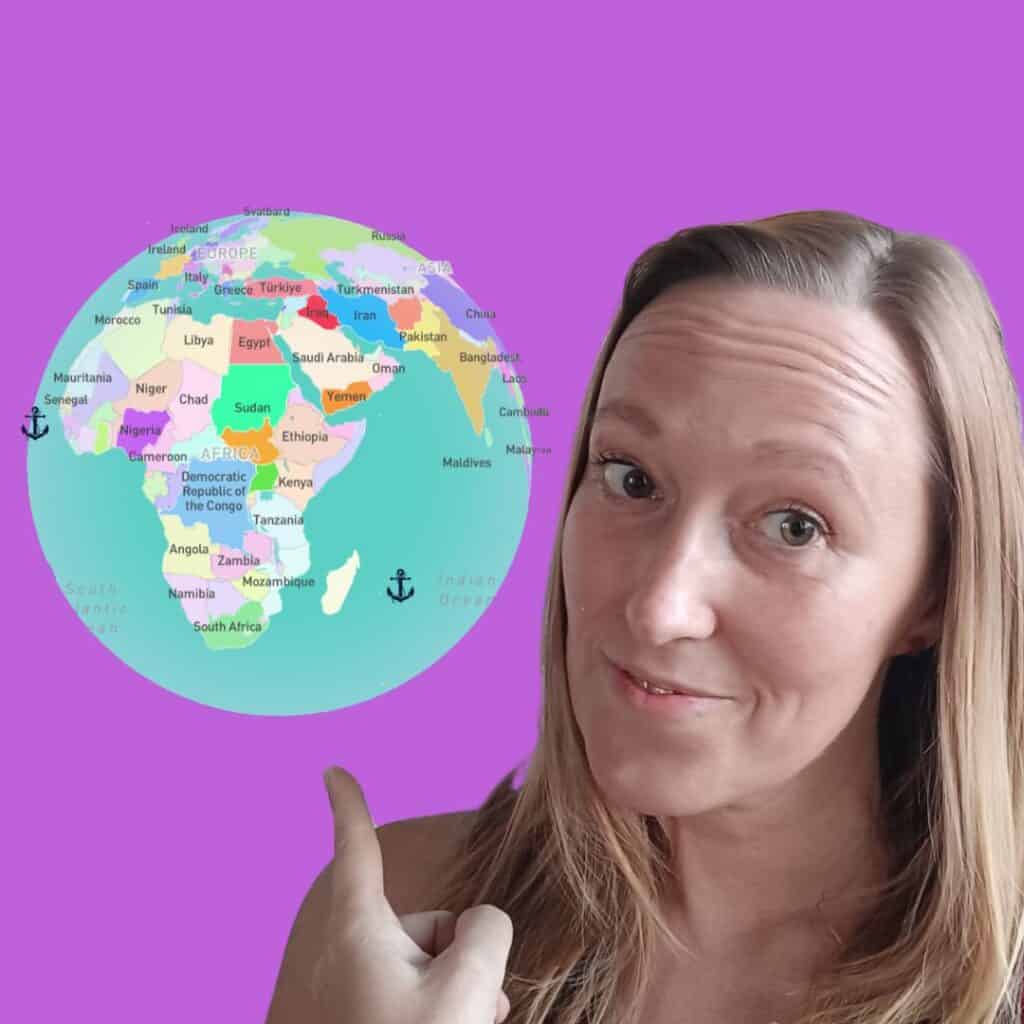
That’s one of the reasons I love reading it so much. For more book recommendations from around the world check out my Book Globe.
The Map Made of Stories
🌍 A clickable, interactive map where every country links to a book set there
📚 218+ books across 67+ countries, with more added regularly
🎥 Video recommendations to help you choose your next read
✨ A digital bookshelf that unfolds like a literary passport
💛 Every book personally read and recommended by Steffi from Books That Teach Us