25 Best Nonfiction Books I’ve Read That Changed How I See the World
For most of my life, I was almost exclusively a fiction reader. I loved getting lost in a good story, and somewhere along the way, I’d convinced myself that nonfiction was probably going to be a bit dry. Statistics, historical accounts, psychology books? Surely they couldn’t be as compelling as a brilliant novel?
Well, I was completely wrong!
The more nonfiction books I’ve read, the more I’ve realised just how fascinating they can be. Some have taught me things about history that I somehow never learnt at school. Others have completely challenged my understanding of the world, helped me become more compassionate, or inspired me to change my habits.
And some are so incredibly well written that they genuinely feel like reading fiction.
I’ve put together 25 of my favourite books, covering everything from historical nonfiction and powerful memoirs to psychology, neuroscience, the climate crisis and personal development.
They’re not all easy reads. Some made me cry, one gave me nightmares, and several left me questioning things I’d believed for years. But every single one taught me something.
I’ve also included a few books that are technically fiction but based on real events, because I discovered them while exploring nonfiction and they deserve a mention.
Whether you’re a lifelong nonfiction reader or someone who’s usually more interested in novels, I hope you’ll find something here worth adding to your reading list.
1. Factfulness by Hans Rosling, Ola Rosling and Anna Rosling Rönnlund
Best for: Understanding the world through facts rather than assumptions
This book absolutely blew my mind.
Factfulness explores how our understanding of the world often differs dramatically from what the statistics actually tell us. It looks at poverty, education, population growth, global development and the assumptions we make about different countries.
Right at the beginning, you’re given a quiz about global trends. I went into it thinking that, as someone who’s fairly well read, travels extensively and follows current affairs, I’d do reasonably well.
I didn’t!
My understanding of global poverty and development was surprisingly far from reality. And it made me wonder how many other things I believe without really questioning the evidence.
What makes this book particularly brilliant is that you absolutely don’t need to enjoy mathematics or statistics to appreciate it. I certainly don’t, but the information is presented so clearly that I found it genuinely compelling.
One of my favourite ideas is moving beyond the simplistic division of countries into ‘developed’ and ‘developing’. I’ve even used the accompanying Gapminder website with my students to explore how people live at different income levels.
My only frustration is that some of the statistics are now dated. I would love an updated version, particularly considering everything that has happened globally since its publication in 2018.
Nevertheless, I think this is one of the most hopeful nonfiction books I’ve ever read. In a world where the news can make everything feel increasingly terrible, it’s refreshing to discover that progress is happening in ways we often overlook.
2. The Elephant Complex by John Gimlette
Best for: Sri Lankan history, travel writing and understanding civil conflict
If big books intimidate you, The Elephant Complex might look rather frightening. It’s enormous!
But don’t let that put you off, because it’s also one of the most fascinating books I’ve read about Sri Lanka.
John Gimlette travels around the country, using the places he visits and the people he meets to explore Sri Lanka’s complicated history.
We learn about colonialism, the civil war, the country’s different communities and the lasting consequences of conflict. His conversations range from politicians and cricketers to people directly involved in the violence.
Of course, there’s also plenty about elephants!
What I particularly enjoyed was the way the history is woven into his travels. Rather than being presented with a dry sequence of historical events, you’re discovering different parts of the country alongside the author.
I read this around the time I was preparing for a trip to Sri Lanka, and it made me even more excited to visit.
I’ve read plenty of fiction set in Sri Lanka, but this book gave me a much deeper understanding of the country’s history and the experiences behind those stories.
If you’re planning a trip to Sri Lanka, have visited already, or simply want to understand more about its recent history, I really recommend it.
3. Educated by Tara Westover
Best for: Powerful memoirs about education, family and resilience
Educated is one of the most moving autobiographies I’ve read.
Tara Westover grows up in an isolated, deeply religious family in rural Idaho, where formal education is rejected and medical care is often avoided.
Instead of attending school, Tara works in dangerous conditions in the family’s scrapyard. Her childhood involves frightening accidents, controlling family relationships and abuse.
But despite everything around her, Tara develops an extraordinary determination to get an education.
She begins teaching herself, eventually gains admission to university and goes on to study at Cambridge.
It’s difficult to imagine making that journey when you’ve grown up without the educational foundations that so many of us take for granted.
What stayed with me most wasn’t simply her academic success, but the enormous emotional cost of questioning everything she’d been taught about her family and the world.
As a teacher, I found her determination particularly powerful.
It’s a memoir about education, but also about identity, independence, family loyalty and what it takes to build a life beyond the one you’ve inherited.
I found it so moving that it made me want to start reading more autobiographies.
4. The Body Keeps the Score by Bessel van der Kolk
Best for: Understanding psychological trauma and its effects
I’d heard about The Body Keeps the Score on several podcasts before finally picking it up.
Bessel van der Kolk is a psychiatrist who has spent decades studying trauma, and this book explores how traumatic experiences can affect both our minds and bodies.
The opening sections are incredibly difficult to read. There are accounts of abuse, violence and experiences that genuinely made me cry.
Content warning: This book contains detailed discussions of trauma, abuse and violence.
However, I found the second half particularly fascinating because it explores different therapeutic approaches to helping people recover.
One area that caught my attention was EMDR, a therapy involving eye movements that can help people process traumatic memories. I remember discussing it with my sister, who works as a mental health therapist in the UK.
The biggest thing this book changed for me was how I think about other people’s behaviour.
We encounter people every day without knowing what they’ve experienced. Sometimes we see someone behaving aggressively or struggling in ways that seem difficult to understand.
This book reminded me that there may be an entire history behind that behaviour that we know nothing about.
I think it’s particularly valuable for teachers, social workers and anyone who regularly works with people.
It’s certainly not light reading, and some of the treatments discussed have varying levels of evidence behind them, but it encouraged me to think much more compassionately about others.
5. The Diary of a Young Girl by Anne Frank
Best for: Understanding the Holocaust through a young person’s experience
Anne Frank was just thirteen when she went into hiding with her family in Nazi-occupied Amsterdam.
As Jewish people facing persecution, the family spent more than two years concealed in a secret annexe alongside several other people.
During that time, Anne kept a diary recording her everyday life, relationships, fears, frustrations and hopes.
What makes this book so extraordinary is that Anne writes about the concerns of an ordinary teenager while living through circumstances that were anything but ordinary.
Of course, knowing what happened afterwards makes the diary particularly heartbreaking. Anne died at Bergen-Belsen concentration camp, while her father, Otto Frank, survived and arranged for her diary to be published.
One of the things that struck me was what Anne and her family understood about the persecution happening around them.
It made me think more deeply about what people knew during the Holocaust and how information circulated during the war.
I think this is an important book for adults and younger readers, although younger readers will benefit from additional historical context.
It’s both a personal diary and an invaluable historical testimony.
6. Tamil Tigress by Niromi de Soyza
Best for: Understanding Sri Lanka’s civil war through a child soldier’s experiences
Tamil Tigress tells the extraordinary and disturbing story of Niromi de Soyza, who joined the Liberation Tigers of Tamil Eelam as a teenager during Sri Lanka’s civil war.
The Tamil Tigers were fighting for an independent Tamil homeland, and the conflict involved terrible violence and abuses committed by different parties.
Niromi describes her childhood, the circumstances that led her to join the movement, and what life was actually like as a young female fighter.
One of the details I found particularly shocking was the cyanide capsules carried by members of the organisation, intended to be used rather than allowing themselves to be captured.
What makes the memoir so valuable is that it explores the complicated reality of someone becoming involved in an armed movement.
How does a child come to believe that joining a military organisation is the right thing to do? What happens when political ideals meet the realities of violence?
Reading this alongside The Elephant Complex gave me very different perspectives on the same conflict.
I learnt an enormous amount about Sri Lanka and the experiences of children caught up in civil wars.
7. How Dare the Sun Rise by Sandra Uwiringiyimana with Abigail Pesta
Best for: Young adult readers interested in refugees, survival and human rights
This is another incredibly moving memoir, and one that I think is particularly valuable for young adult readers.
Sandra Uwiringiyimana survived a massacre at a refugee camp in Burundi after her family fled violence in the Democratic Republic of Congo.
Some of her family members were killed, and she describes the terrifying experience of trying to survive, find loved ones and make sense of what had happened.
The memoir also follows her family’s eventual resettlement in the United States, where she faces new challenges involving identity, belonging and the experience of being a refugee.
I remember reading this during private reading time with my students and realising that I needed to stop.
Not because it wasn’t appropriate to read, but because I was getting so upset that I thought I might burst into tears in the classroom!
The writing is accessible, making it a good choice for teenagers, but the subject matter is extremely serious.
It’s an important reminder that behind discussions about refugees and immigration are individual people, families and children who have experienced things many of us can barely imagine.
Content warning: Massacre, bereavement and violence.
8. The Patient Assassin by Anita Anand
Best for: Historical nonfiction that reads like a thriller
I am a massive fan of Anita Anand, and The Patient Assassin is an excellent example of why.
In April 1919, British troops opened fire on an unarmed crowd in Amritsar, India, killing hundreds of people in what became known as the Jallianwala Bagh massacre.
More than twenty years later, an Indian revolutionary named Udham Singh assassinated Michael O’Dwyer, the former Lieutenant Governor of Punjab.
Anand investigates Singh’s life, the massacre, the political circumstances surrounding it and the long journey that eventually led to the assassination.
What I found so fascinating was how much of the story felt like fiction.
There are international journeys, secretive political networks, extraordinary characters and a revenge plot that unfolds over decades.
Except it really happened.
Anand also carefully examines the legends surrounding Singh rather than simply repeating them as historical fact.
It’s meticulously researched but never feels like reading a textbook.
For me, it’s one of the best historical nonfiction books for readers who normally prefer novels, particularly if you enjoy thrillers and stories about revenge.
9. Set Boundaries, Find Peace by Nedra Glover Tawwab
Best for: Personal development and improving relationships
I found this book so practical and genuinely helpful.
Nedra Glover Tawwab is a therapist who explores why setting boundaries is important and, crucially, how to communicate them.
The book covers family relationships, friendships, romantic relationships, workplace expectations, technology and even boundaries we need to establish with ourselves.
As I was reading, there were so many occasions when I thought, ‘Yes! That’s exactly what I need to be doing.’
Sometimes we know that a situation isn’t making us happy, but we struggle to explain what we need without feeling guilty or worrying about upsetting someone.
This book provides useful ways of communicating more clearly and respectfully.
I think a lot of us are guilty of people-pleasing, and it’s easy to forget that being kind to other people doesn’t mean ignoring your own needs.
If you’re looking for a personal development book with ideas you can actually put into practice, this is a great choice.
10. Why Has Nobody Told Me This Before? by Dr Julie Smith
Best for: Accessible psychology and everyday mental wellbeing
Dr Julie Smith became widely known for her short, accessible psychology videos, and her book follows a similar approach.
Rather than focusing on one particular issue, it covers a wide range of challenges people experience in everyday life.
There are sections on motivation, grief, fear, stress, self-doubt and finding meaning.
What I particularly liked was how easy it is to navigate.
The chapters are short, there are practical exercises and questions to reflect on, and the information is broken down into manageable sections.
It’s the kind of book you could read from beginning to end, but also return to when you’re struggling with something specific.
I appreciated that it didn’t feel unnecessarily complicated.
You don’t need a background in psychology to understand the ideas, and there’s plenty that I think most people could benefit from exploring.
It isn’t a replacement for professional mental health support, but as an introduction to useful psychological tools, I thought it was excellent.
11. The Wager by David Grann
Best for: True survival stories, shipwrecks and historical adventure
Oh my goodness, this story!
The Wager is one of those books that made me repeatedly wonder how any of this could possibly be true.
In the eighteenth century, the British naval ship HMS Wager was wrecked near the coast of South America while taking part in a military expedition.
The surviving crew faced hunger, terrible conditions and increasingly serious disagreements over how they should survive.
What follows involves mutiny, competing accounts of events and accusations that eventually have consequences back in Britain.
I found the psychological side particularly fascinating.
What happens when a group of people are isolated, starving and fighting for survival? Do they work together, or does society begin to break down?
David Grann reconstructs the events using historical records and conflicting testimonies, allowing readers to consider how different people understood what happened.
It’s brilliantly researched, but it reads like an adventure novel.
I would particularly recommend this to anyone who loves survival stories, maritime history or gripping nonfiction.
12. Sophia: Princess, Suffragette, Revolutionary by Anita Anand
Best for: Forgotten women’s history and the British Empire
Another Anita Anand recommendation, because I really do love her writing!
This biography follows Princess Sophia Duleep Singh, whose extraordinary life connects Indian royal history, British colonialism and the campaign for women’s voting rights.
Sophia was the daughter of Maharaja Duleep Singh, who had been removed from his kingdom following British annexation of Punjab.
Raised in Britain, Sophia occupied an unusual position within British society, with royal connections but a family history profoundly shaped by empire.
She eventually became involved in the women’s suffrage movement, campaigning for political change and supporting other important causes.
I knew nothing about Sophia before reading this, which made it particularly fascinating.
What I loved was how Anand brought together so many historical threads while telling the story of one family.
There’s a huge amount to learn about the British Empire, the treatment of Indian royalty and the women who fought for political representation.
Like The Patient Assassin, it feels much more like reading a compelling story than a traditional biography.
13. The Monk Who Sold His Ferrari by Robin Sharma
Best for: Meditation, mindfulness and developing healthier habits
This was quite different from the books I usually read.
The Monk Who Sold His Ferrari is a fictional personal development parable about Julian Mantle, a successful lawyer whose demanding lifestyle leads him to reconsider his priorities.
After travelling to India and learning from spiritual teachers, he returns with lessons about happiness, discipline, purpose and finding balance.
I’ll admit that when I first started reading it, I wasn’t entirely convinced by the very simple writing style.
I’m used to reading quite complex literature, and initially it seemed almost too straightforward.
But actually, that simplicity is one of the things that makes the book accessible.
I’m already very interested in meditation, and I found several of the ideas about routines, mindfulness and prioritising what matters particularly useful.
It might not be the most intellectually challenging book on this list, but it’s one that stayed with me.
If you’re feeling overwhelmed or want to create more space for yourself in everyday life, there are some worthwhile ideas here.
14. Miss Burma by Charmaine Craig
Best for: Historical fiction inspired by real family history
Although I originally included this among my nonfiction recommendations, Miss Burma is actually a historical novel inspired by the lives of Charmaine Craig’s mother and grandparents.
It’s well worth mentioning here because I learnt so much about Myanmar, formerly Burma, through reading it.
The story follows a family across decades of political upheaval, exploring colonial rule, the Second World War, ethnic divisions and the struggle for independence.
It focuses particularly on the experiences of the Karen people, one of Myanmar’s ethnic minorities.
What struck me most was how little I knew about this history.
As someone who grew up in Britain, I was taught a considerable amount about the Second World War, but comparatively little about what happened in Southeast Asia or Britain’s colonial involvement there.
Reading Miss Burma made me realise how much history I’d never encountered in the classroom.
There’s something especially powerful about historical fiction that encourages you to investigate the real events behind the story.
I would recommend this to readers interested in Southeast Asian history, family sagas and historical novels that explore perspectives often missing from British history lessons.
15. Wild Swans: Three Daughters of China by Jung Chang
Best for: Chinese history through three generations of women
Wild Swans is one of the most extraordinary books I’ve ever read.
It follows three generations of Jung Chang’s family, beginning with her grandmother and continuing through her mother’s life and her own experiences growing up in China.
Through these women’s stories, we witness enormous political and social changes, including the rise of Mao Zedong and the Cultural Revolution.
This book genuinely gave me nightmares.
Some of the experiences described are incredibly disturbing, particularly the way political ideology could turn family members, friends and neighbours against one another.
I found myself thinking about how people could become so committed to a political movement that they were willing to betray those closest to them.
It also connected in my mind with The Body Keeps the Score, particularly when considering how fear, violence and trauma can affect individuals and whole communities.
This is a substantial book, and certainly not an easy one.
But if you’re interested in Chinese history, women’s experiences or understanding how major political events affect ordinary families, I think it’s an incredibly important read.
16. It’s Not That Radical by Mikaela Loach
Best for: Climate activism, environmental justice and finding hope
I’d been following Mikaela Loach on social media for quite some time before reading her book.
She’s a climate justice activist who argues that addressing the environmental crisis requires much bigger changes than simply asking individuals to recycle more or use fewer plastic bags.
And I have to admit something.
When I first read It’s Not That Radical, I actually thought some of her ideas were incredibly radical!
Some of the changes she proposed seemed unrealistic to me.
But the more I reflected on the book, the more I realised that perhaps part of the problem is how easily we dismiss major changes as impossible before seriously considering them.
Living in Thailand, I sometimes find environmental issues particularly overwhelming. There are enormous amounts of single-use plastic, and seasonal air pollution can be absolutely awful.
It’s easy to feel that whatever we’re doing individually isn’t enough.
What I eventually appreciated about this book was its emphasis on collective action, political responsibility and the possibility of creating a better system.
Rather than leaving me feeling helpless, it made me think about what might actually be achievable if enough people were prepared to push for change.
It’s one I appreciated more after taking some time to think about it.
17. Big Magic by Elizabeth Gilbert
Best for: Creativity, writing and finding inspiration
You might know Elizabeth Gilbert from Eat, Pray, Love, but Big Magic is a very different book.
It’s all about creativity, where ideas come from and why we should allow ourselves to create without constantly worrying about success.
One of my favourite stories involves a poet who describes feeling a poem approaching her, almost as though it exists independently and she has to capture it before it disappears.
Gilbert explores the idea that creativity might be something we connect with rather than something we completely control.
It’s a rather magical way of looking at the creative process.
Of course, you have to be willing to approach some of these ideas with an open mind.
I certainly was, and I found the whole book incredibly inspiring.
What I particularly liked was the reminder that creativity doesn’t have to lead to recognition, publication or financial success.
Sometimes we can simply write, paint, make music or create something because we enjoy doing it.
I finished this book wanting to go away and make something.
If you’re a writer, artist or someone who wants to be more creative, I really recommend it.
18. My Own Story by Emmeline Pankhurst
Best for: Women’s suffrage, feminism and British social history
This is one of the books that most changed how I think about the rights I have today.
Published in 1914, My Own Story is Emmeline Pankhurst’s account of her political activism and the campaign for women’s voting rights in Britain.
I expected it to be quite challenging to read because of when it was written, but I was pleasantly surprised by how accessible I found it.
What shocked me was how much I’d never learnt about the suffragettes, despite studying the movement at school.
Pankhurst discusses the terrible conditions many women faced, including inequalities surrounding employment, poverty, motherhood and political representation.
It becomes clear that the campaign for votes wasn’t simply about being treated equally to men.
It was also about gaining the political power necessary to improve women’s lives.
The sections about imprisonment and force-feeding were particularly horrifying.
Suffragettes who went on hunger strike were subjected to forced feeding, despite serious concerns about the dangers of the practice.
I was also fascinated by the ethical questions surrounding militancy and political protest.
How far should people go when fighting against injustice? Why are some forms of protest considered acceptable while others aren’t?
This is especially interesting because Pankhurst was writing during the campaign, rather than looking back on it decades later.
I’ve always voted, but reading this made me even more conscious of what women went through to win that right.
19. City of Djinns by William Dalrymple
Best for: Indian history, Delhi and literary travel writing
William Dalrymple is a fantastic historical writer, and City of Djinns is one of my favourite books about India.
The book follows his experiences living in Delhi, using the people he meets and the places he explores to uncover the city’s extraordinary past.
Rather than moving through history chronologically, Dalrymple allows everyday encounters to lead him into different periods.
A conversation with someone might introduce a discussion about Partition, a former kingdom or a community’s history.
I particularly enjoyed learning about the Sikhs and the complicated history of northern India.
There are some genuinely horrific historical events discussed, but there’s also humour and an obvious fascination with the city and its inhabitants.
I loved that balance.
It made history feel connected to the people and places that still exist today.
The book made me want to visit Delhi, which I eventually did.
If you’re travelling to India, especially Delhi, I think reading this beforehand could add a whole new dimension to your experience.
20. Man’s Search for Meaning by Viktor E. Frankl
Best for: Philosophy, resilience and finding purpose
Viktor Frankl was an Austrian psychiatrist and Holocaust survivor who wrote about his experiences in Nazi concentration camps.
Man’s Search for Meaning, first published in 1946, combines his personal experiences with his psychological ideas about the importance of finding meaning in life.
As you’d expect, parts of the book are extremely difficult to read.
Frankl describes the appalling conditions in the camps and reflects on how prisoners responded to suffering, fear and the loss of almost everything familiar.
One of the ideas that stayed with me was his belief in the importance of having a sense of purpose, even in circumstances where people have very little control over what happens to them.
He also describes moments of kindness between prisoners despite the terrible conditions.
I found it both devastating and deeply philosophical.
This is a short book, but there’s an enormous amount to think about.
It’s particularly worth reading if you’re interested in psychology, philosophy or the ways people search for meaning during extremely difficult experiences.
21. The Happiness Advantage by Shawn Achor
Best for: Positive psychology and practical approaches to happiness
I first came across Shawn Achor through his TED Talk about happiness, which I absolutely loved.
It’s funny, engaging and packed with interesting ideas. I’ve even shown it to my students.
Achor studied happiness and positive psychology, including research connected with Harvard, and The Happiness Advantage explores how our psychological outlook can affect motivation, productivity and wellbeing.
What I found particularly interesting was the challenge to the assumption that achieving success will automatically make us happy.
Instead, Achor argues that developing a more positive outlook can help us perform better and engage more effectively with everyday life.
The book discusses different exercises and habits intended to support wellbeing.
Some of the research involving memory and the effects of positive experiences particularly fascinated me, although, as with any popular psychology book, it’s worth distinguishing individual studies from conclusions that have been repeatedly established.
I found it a genuinely enjoyable and accessible introduction to positive psychology.
If you want a relatively easy-to-read personal development book with practical ideas, this is a good one to try.
22. The Wilkomirski Affair by Stefan Maechler
Best for: Psychology, memory, historical truth and unusual nonfiction
This is one of the strangest nonfiction books I’ve ever read.
I first encountered it at university while studying a history module called Terror Remembered, which examined how societies remember events involving mass violence, persecution and genocide.
The Wilkomirski Affair investigates a supposed Holocaust memoir called Fragments, written by a man using the name Binjamin Wilkomirski.
The memoir described his experiences as a young child in Nazi concentration camps.
It was initially celebrated as a powerful survivor testimony.
However, questions gradually emerged about whether the events he described had actually happened to him.
Historian Stefan Maechler investigated his background, interviewed witnesses and examined documentary evidence, ultimately establishing that the account was not an authentic Holocaust survival memoir.
What makes the investigation so fascinating is that it raises questions far beyond the particular case.
How reliable is memory? How do we approach accounts of trauma when someone’s recollections are difficult to verify? How do we balance compassion for an individual with the responsibility to establish historical truth?
These are incredibly complicated questions.
I found the book absolutely fascinating because it made me question how we understand memory and the stories people tell about their lives.
If you’re interested in psychology, history or the ethics of historical testimony, this is an unusual and thought-provoking read.
23. Siddhartha’s Brain by James Kingsland
Best for: Neuroscience, meditation and mindfulness
I love books that bring together ancient ideas and modern scientific research.
Siddhartha’s Brain does exactly that by exploring what neuroscience can tell us about meditation and mindfulness.
James Kingsland examines the life and teachings of the Buddha alongside research into the brain, considering what happens when people develop regular meditation practices.
The book explores how meditation may influence attention, emotional regulation and patterns of brain activity.
As someone who’s already interested in meditation, I found the scientific side particularly exciting.
There were so many moments when I wanted to stop reading and immediately tell someone what I’d just learnt.
In fact, I remember doing exactly that while reading it on holiday with my friend Jen. Sorry, love!
What I particularly enjoyed was the combination of historical ideas and contemporary research.
You don’t have to be a Buddhist to find the subject interesting.
If you’re curious about the brain, mindfulness or the science behind meditation, I think you’ll really enjoy it.
24. A Long Walk to Water by Linda Sue Park
Best for: Young readers, refugee experiences and books inspired by real events
A Long Walk to Water is another book that isn’t strictly nonfiction, although part of it is based on a real person’s experiences.
The novel follows two children in Sudan across different time periods.
Salva is an eleven-year-old boy who becomes separated from his family during the Second Sudanese Civil War in 1985.
His story follows his extraordinary journey as a refugee, including the dangers he faces and his struggle to find safety.
Alongside Salva’s experiences, we follow Nya, a fictional girl living in 2008 whose daily life revolves around collecting water for her family.
Eventually, the two stories connect.
The real Salva Dut went on to establish Water for South Sudan, an organisation working to improve access to clean water.
What I particularly appreciated about this book was that it didn’t simply educate readers about a humanitarian problem.
It also showed how the knowledge gained from reading can inspire people to take action.
The writing is accessible for younger readers, but there is plenty here for adults too.
If you’d like to learn more about the real work behind the story, visit Water for South Sudan.
25. The Immortal Life of Henrietta Lacks by Rebecca Skloot
Best for: Medical history, scientific ethics and extraordinary true stories
If I could recommend just one nonfiction book from this entire list, it might be this one.
The Immortal Life of Henrietta Lacks tells the story of an African American woman whose cancer cells were taken during her treatment in the 1950s.
Those cells became known as HeLa cells and were remarkable because they could continue growing and reproducing in laboratory conditions.
They went on to play an enormously important role in medical research.
But Henrietta had not given informed consent for her cells to be used in this way.
And while laboratories and companies benefited from the scientific advances associated with HeLa cells, her family experienced poverty and struggled with access to healthcare.
Rebecca Skloot investigates both the scientific significance of the cells and the experiences of Henrietta’s descendants.
I learnt so much from this book.
It raises enormous ethical questions about medical consent, ownership of biological materials, racism, poverty and the relationship between patients and researchers.
Who should benefit financially when someone’s cells become valuable to science? What rights should patients have over materials taken from their bodies? How should researchers work with families whose experiences have been shaped by medical exploitation?
These questions are complicated, and the answers aren’t always straightforward.
But I think that’s exactly why this book is so important.
It’s an incredible combination of scientific history, investigative journalism and one family’s story.
I have a separate video dedicated to it because there is so much more to discuss.
If you’re only planning to read one book from these recommendations, this would be a very strong place to start.
More Nonfiction Books on My Reading List
Of course, putting together this list reminded me just how many more nonfiction books I wanted to read.
At the time of recording, these were on my TBR, rather than books I was reviewing:
- The Interesting Narrative of the Life of Olaudah Equiano by Olaudah Equiano: An eighteenth-century autobiography describing enslavement, freedom and Equiano’s involvement in the abolitionist movement.
- Atomic Habits by James Clear: A popular personal development book about building better habits and making small, sustainable changes.
- Sapiens: A Brief History of Humankind by Yuval Noah Harari: A sweeping exploration of human history, evolution and the societies we’ve created.
- I Know Why the Caged Bird Sings by Maya Angelou: A celebrated autobiographical work exploring childhood, racism, identity and resilience.
- Between the World and Me by Ta-Nehisi Coates: A personal exploration of race and the Black experience in the United States, written as a letter to the author’s son.
- Empireland by Sathnam Sanghera: An examination of Britain’s imperial history and its continuing influence on contemporary society.
- All We Can Save, edited by Ayana Elizabeth Johnson and Katharine K. Wilkinson: A collection of writing about climate change, leadership and possible solutions.
- Thinking, Fast and Slow by Daniel Kahneman: A book examining human judgement, cognitive biases and the different ways we think.
- Atlas of the Heart by Brené Brown: An exploration of human emotions and experiences, which I was halfway through when I recorded the video.
- Killers of the Flower Moon by David Grann: Another historical true-crime book by the author of The Wager, which was also on my reading list.
I also mentioned Eat, Pray, Love by Elizabeth Gilbert as another book I’d enjoyed, alongside Big Magic.
Which Nonfiction Book Should You Read First?
With 25 books covering so many subjects, it’s difficult to choose just one.
If you’re interested in history and want something that reads almost like a thriller, I’d start with The Patient Assassin or The Wager.
For a powerful memoir, Educated is a wonderful choice, while Wild Swans is particularly memorable if you want to learn more about Chinese history.
If you’re looking for something practical, Set Boundaries, Find Peace and Why Has Nobody Told Me This Before? both have plenty of useful ideas.
And if you want a book that will challenge your assumptions about the world, I’d recommend Factfulness.
But my personal favourite recommendation remains The Immortal Life of Henrietta Lacks. It really is an extraordinary book.
One thing that reading more nonfiction has taught me is just how much we can learn from subjects we wouldn’t normally choose.
I spent years assuming I preferred fiction, and now some of my most memorable reading experiences have come from true stories, historical research and books about the way the world works.
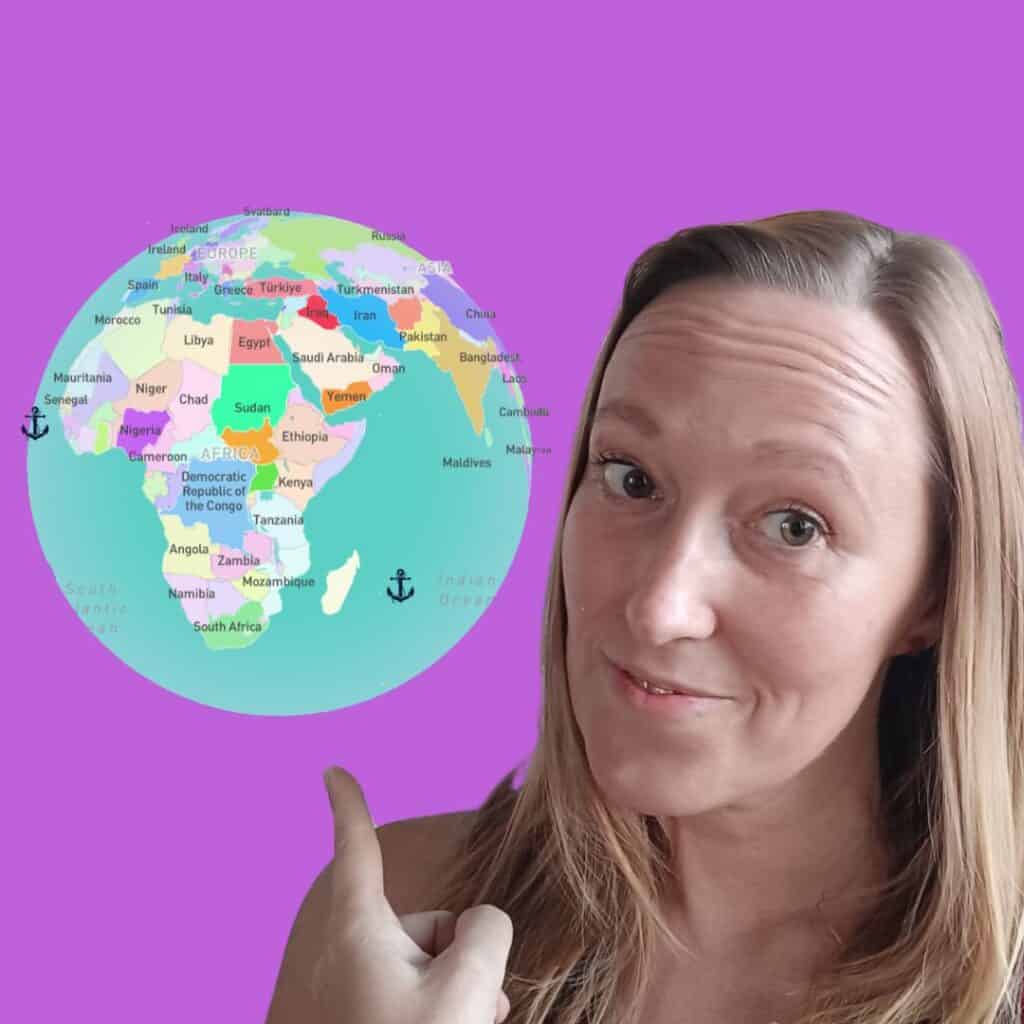
You can also explore more of my recommendations on Books That Teach Us, watch my book reviews on YouTube and discover books from different countries using my Book Globe.
The Map Made of Stories
🌍 A clickable, interactive map where every country links to a book set there
📚 218+ books across 67+ countries, with more added regularly
🎥 Video recommendations to help you choose your next read
✨ A digital bookshelf that unfolds like a literary passport
💛 Every book personally read and recommended by Steffi from Books That Teach Us