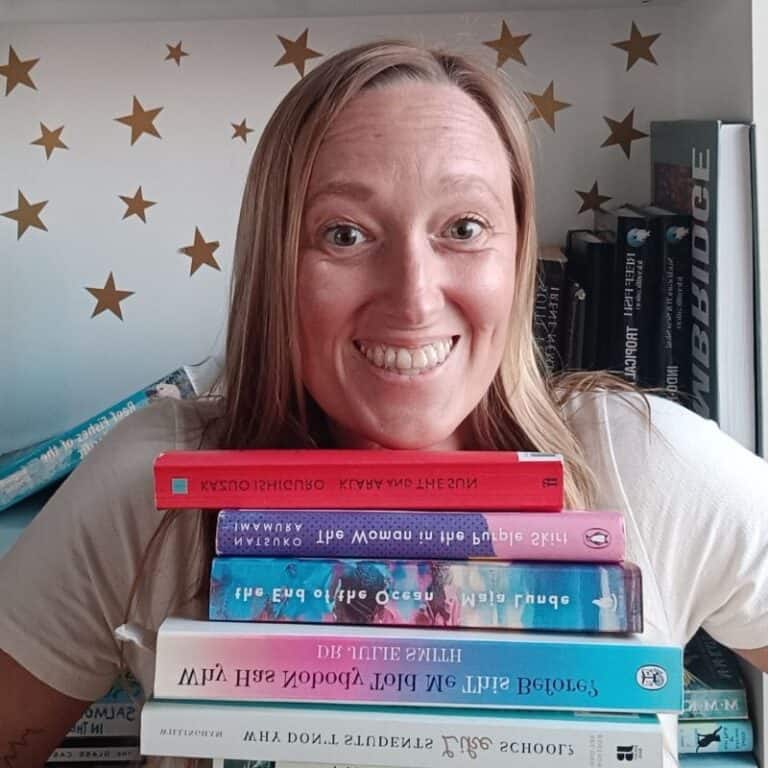
27 Books About Refugees and Displacement Around the World
Books about refugees and displacement are particularly close to my heart. I’ve worked with the refugee community in Bangkok for the last ten years, and reading these stories has helped me understand more about the different reasons people are forced to leave their homes.
I’ve put together 27 books about refugees, war, persecution and displacement from around the world. There’s a mixture of historical fiction, contemporary novels, powerful memoirs, young adult books and even a picture book.
Not every book is about someone who is officially a refugee. Some explore people who are internally displaced, forced into hiding, or struggling to find somewhere they belong after leaving their country. What connects them is the experience of losing a home, a community or a sense of belonging, often through circumstances completely outside their control.
These books have taught me about historical events I knew very little about, from the Biafran War in Nigeria to the expulsion of Asians from Uganda. Others have made me think about the emotional consequences of leaving somewhere behind, even when that means reaching safety.
1. I Am Malala by Malala Yousafzai
I Am Malala is the autobiography of Malala Yousafzai, the Pakistani education activist who was shot by the Taliban for speaking out in support of girls’ education.
What I found particularly interesting about this memoir was how much it taught me about the Swat Valley in Pakistan, where Malala grew up. Her father was an advocate for girls’ education, but as the Taliban became more powerful in the region, attending school became increasingly dangerous.
Malala survived the attack and was eventually treated in Birmingham in the UK, where she subsequently settled with her family.
One of the saddest things about her story, for me, was her description of the beautiful Swat Valley, with its mountains and natural surroundings. She clearly loved her home, yet she was forced to build a new life in Birmingham, a very different environment.
I also found her observations about environmental destruction and flooding in the region fascinating. The book made me think about how environmental disasters, poverty and political instability can interact, creating circumstances in which extremist groups gain influence.
Malala is an extraordinary person, and I’ve also used extracts from her memoir with students at school. It’s a book I would highly recommend.
2. The Wind Knows My Name by Isabel Allende
Isabel Allende is one of my all-time favourite authors, and The Wind Knows My Name is a beautiful novel about child refugees and the lasting consequences of family separation.
The story begins in Austria in 1938, where we meet a Jewish boy whose life is about to be transformed by the rise of Nazism. Initially, I thought I was going to be reading a historical novel focused entirely on the Holocaust, but the story eventually moves into the present day.
Allende connects different characters and generations through the experiences of children separated from their families. The novel explores historical persecution alongside more recent events, including the separation of migrant families at the US-Mexico border.
One thing that struck me was how beautifully she connects stories that initially appear unrelated. As the different narratives come together, you begin to understand how the experiences of displaced children can echo across generations and continents.
Allende also has a foundation supporting vulnerable women and children, and I felt that her compassion for displaced families came through in every part of this novel.
3. The Beekeeper of Aleppo by Christy Lefteri
This book absolutely broke my heart.
The Beekeeper of Aleppo follows a Syrian couple forced to flee their country during the civil war. Their journey towards the UK is filled with danger, exploitation and unimaginable loss.
One of the most important things this novel highlights is that escaping a war does not automatically mean someone is safe. Refugees can face horrifying experiences while travelling, including violence, sexual violence and exploitation by people who prey on their desperation.
The novel is also an incredibly moving exploration of grief and trauma, particularly the ways people respond to experiences that are almost impossible to comprehend.
I made the questionable decision to read this during a two-week hotel quarantine during COVID, when I couldn’t speak face to face with another human being. I was already feeling isolated, and this book had me absolutely sobbing.
I really don’t recommend that particular reading environment!
It’s devastating, but I think it’s one of those novels that can genuinely change the way someone views refugees and the experiences they endure.
4. How Dare the Sun Rise by Sandra Uwiringiyimana
How Dare the Sun Rise is a young adult memoir about surviving violence, becoming a refugee and finding a sense of belonging in a new country.
Sandra Uwiringiyimana’s family fled violence in the Democratic Republic of Congo and sought refuge in a camp in Burundi. While they were there, the camp was attacked and several members of her family were murdered.
It’s an incredibly difficult subject, particularly for a book aimed at younger readers. I remember thinking how emotionally challenging some of these experiences would be for a fourteen-year-old to read.
However, the memoir doesn’t end with Sandra escaping the violence. It also explores what happens when her family is resettled in the United States.
She has to navigate school, friendships and cultural differences while dealing with the trauma of everything she has experienced. There are also questions about surviving family members and how to rebuild relationships after so much loss.
I think it’s an important reminder that reaching a safer country isn’t necessarily the end of a refugee’s story. The process of belonging and rebuilding a life can take years.
5. Tamil Tigress by Niromi de Soyza
Tamil Tigress is one of the most unusual memoirs on this list because it tells the story of a teenage girl who joined the Tamil Tigers during the Sri Lankan Civil War.
Published under a pseudonym, the memoir explores the tensions between Sri Lanka’s Tamil minority and the Sinhalese-dominated government, including the discrimination and political violence that contributed to the conflict.
As a teenager, Niromi joins the Liberation Tigers of Tamil Eelam, an armed separatist organisation responsible for numerous terrorist attacks.
One of the most disturbing details is how the fighters carry cyanide capsules, with the expectation that they should kill themselves rather than be captured.
Niromi eventually becomes disillusioned with the organisation and its methods. She later leaves Sri Lanka and settles in Australia.
What makes this such a fascinating memoir is the moral complexity of a young person becoming involved in an armed movement. It raises difficult questions about oppression, resistance, violence and the recruitment of children into conflict.
It certainly isn’t a straightforward refugee memoir, but it’s an incredibly powerful book about the circumstances that can lead people into war and eventually force them to leave their country.
6. Buried Beneath the Baobab Tree by Adaobi Tricia Nwaubani
This young adult novel is inspired by the kidnapping of schoolgirls by Boko Haram in northeastern Nigeria in 2014.
Buried Beneath the Baobab Tree follows a teenage girl whose ordinary life is destroyed when militants attack her community and abduct her.
The novel explores forced displacement, religious extremism and the indoctrination of young people. The girls are subjected to violence and coercion, including pressure to adopt Boko Haram’s extremist beliefs.
One of the things I found interesting was how the book approaches such horrific events for a younger audience.
At times, I felt certain experiences were only briefly explored or not fully explained. As an adult reader, I understood some of the implications, but I wondered whether younger readers would necessarily recognise the full extent of what was happening.
The author drew on interviews with people affected by Boko Haram, including survivors of abduction, which makes the story particularly affecting.
It’s another book that reminds us displacement isn’t always about crossing international borders. Sometimes people are forcibly removed from their own communities and trapped within their own country.
7. Chai Time at Cinnamon Gardens by Shankari Chandran
I absolutely loved this book.
Chai Time at Cinnamon Gardens is primarily set in a nursing home in Sydney, Australia, run by a Sri Lankan family.
On the surface, it’s a contemporary novel about the residents, staff and relationships within the home. However, as the story develops, we discover the traumatic histories that some characters have carried with them from Sri Lanka.
Through flashbacks, we learn about the Sri Lankan Civil War and the experiences of people who were persecuted, displaced or forced to leave their homes.
There are also ongoing racial tensions in Sydney, with hostility directed towards the nursing home and its South Asian community.
What I particularly enjoyed was that alongside these important historical and social themes, there’s also a genuinely intriguing storyline that makes you want to keep reading.
The book explores racism, survivor’s guilt, trauma and the challenges of building a new life while carrying the memories of another.
It’s a powerful Australian novel and one I’d really recommend.
8. Before We Were Free by Julia Alvarez
If you’re looking for a shorter book about political persecution and displacement, Before We Were Free is an excellent choice.
The novel takes place in the Dominican Republic during the dictatorship of Rafael Trujillo and is loosely inspired by the author’s own family experiences.
We see everything through the eyes of twelve-year-old Anita, who gradually realises that something dangerous is happening around her.
There are mysterious visitors, cars following family members and adults having conversations they don’t want her to overhear.
At school, she’s expected to honour the country’s dictator, while at home her family is secretly involved in resistance against his government.
I thought the young narrator was particularly effective because, as an adult reader, you understand the danger long before Anita fully appreciates what’s happening.
Eventually, members of the family are separated, with some escaping to the United States while others remain behind.
It raises a difficult question: how much should someone risk to fight for their country, particularly when staying could endanger their own children?
9. The Buddha in the Attic by Julie Otsuka
I keep recommending this book because I’ve honestly never read anything quite like it.
The Buddha in the Attic tells the story of Japanese picture brides who travelled to the United States in the early twentieth century to marry men they had never met.
Many arrived expecting comfortable lives after receiving letters describing beautiful homes and promising opportunities. Instead, they found themselves living in poverty, often working in agriculture under extremely difficult conditions.
The novel follows their experiences of marriage, motherhood, racism and trying to establish themselves in a country where they are treated as outsiders.
Eventually, the story reaches the Second World War, when Japanese Americans were forcibly removed from their homes and incarcerated following the attack on Pearl Harbor.
What makes this novel extraordinary is the writing style.
Rather than following one main character, the narrative is told through a collective ‘we’. We hear the experiences of many women woven together into a single voice.
Some women experience terrible marriages, others find moments of happiness, and many have completely different lives. Yet their stories form a collective history.
I’ve never read a book written in quite this way, and I thought it was absolutely incredible.
10. The Mountains Sing by Nguyễn Phan Quế Mai
The Mountains Sing follows several generations of a Vietnamese family through decades of political upheaval, war and displacement.
The narrative particularly focuses on a grandmother and granddaughter, whose experiences help us understand the consequences of the Vietnam War and earlier conflicts.
I found the family relationships especially interesting because the conflict wasn’t simply a war between Vietnam and the United States. It also involved deep divisions within Vietnam itself, including between North and South.
These political divisions could split families apart, leaving people on opposing sides of a devastating conflict.
The novel explores what happens when people survive extraordinary trauma but are left with damaged relationships, painful memories and years of separation.
I believe this was the first novel I’d read by a Vietnamese author, and it taught me so much about the country’s history from a perspective I hadn’t encountered before.
It also made me question whether families can ever completely rebuild their relationships after the experiences of war.
11. Miss Burma by Charmaine Craig
Miss Burma taught me an enormous amount about Myanmar, formerly known as Burma, and the country’s different ethnic communities.
Although it’s a fictional novel, it draws heavily on the experiences of Charmaine Craig’s own family, including her grandparents and mother.
Before reading it, I knew relatively little about the relationships between Burma’s ethnic groups, particularly the Karen people and the majority Bamar population.
The novel explores how colonialism, political power and struggles for autonomy contributed to conflict and persecution.
Many of these communities have historical and cultural connections across the border with Thailand, which made the story particularly interesting to me.
There’s also the rather extraordinary detail behind the title. The author’s mother was involved in a beauty pageant during a period of political turmoil.
Throughout the novel, characters face violence, persecution and dangerous journeys through jungle regions as they try to escape conflict.
I finished this book feeling that I’d learnt so much about Myanmar, but also that there was an enormous amount more I wanted to understand.
12. Half of a Yellow Sun by Chimamanda Ngozi Adichie
Chimamanda Ngozi Adichie is one of my favourite authors, and Half of a Yellow Sun is probably the most gruelling of her novels that I’ve read.
It takes place during the Nigerian Civil War, also known as the Biafran War, in the late 1960s.
Before reading this book, I knew very little about the conflict or the attempt to establish an independent Biafran state.
The novel explores political and ethnic tensions in postcolonial Nigeria, particularly those affecting the Igbo people.
We experience the conflict through several different characters, including two sisters, a young houseboy and a British writer.
I thought these different viewpoints were particularly effective because they reveal how the war affects people from very different backgrounds and social positions.
The Biafran War caused widespread displacement, starvation and one of the major humanitarian crises of the twentieth century.
Adichie doesn’t shy away from the terrible violence or the suffering of civilians.
It’s heartbreaking, but it taught me about a part of African history that I think deserves far more attention.
13. How to Pronounce Knife by Souvankham Thammavongsa
How to Pronounce Knife is a collection of short stories exploring the experiences of Lao immigrants and refugees, particularly in Canada.
At the time of putting this list together, I’d only read the first story, but I loved it so much that I wanted to include the book.
As an English teacher, the title immediately caught my attention because ‘knife’ is exactly the sort of English word that can cause confusion for language learners.
In the opening story, a young girl becomes aware that her father doesn’t know how to pronounce the word correctly.
It’s such a small moment, but it captures something much bigger about the experiences of immigrant families.
Children who grow up attending school in their new country can become more confident in the language than their parents. That creates an interesting change in family relationships, particularly when a child begins to realise they know something their parents don’t.
What I found especially moving was the girl’s reluctance to correct her father.
The story really captures that mixture of love, embarrassment and loyalty, and I’m looking forward to reading the rest of the collection.
14. First They Killed My Father by Loung Ung
I first read First They Killed My Father during my first visit to Cambodia, which made the experience particularly emotional.
It’s Loung Ung’s memoir about surviving the Khmer Rouge regime in Cambodia during the 1970s.
When the Khmer Rouge came to power under Pol Pot, millions of Cambodians were forcibly displaced from cities and subjected to forced labour, starvation and political persecution.
People considered educated or associated with the previous society were particularly vulnerable, including teachers, professionals and intellectuals.
Loung was still a young child when her family was forced from their home, and her memoir describes the devastating consequences of the regime.
Several members of her family were killed, and she eventually escaped Cambodia before resettling in the United States.
I also visited the Killing Fields while travelling in Cambodia. It’s an incredibly difficult place to visit, particularly when you’ve read personal accounts of what happened, but I think it’s important to understand and remember this history.
The memoir also highlights how instability affected the wider region, including neighbouring Laos, Vietnam and Thailand.
It’s an extremely challenging read, but an important one.
15. The Island of Missing Trees by Elif Shafak
The Island of Missing Trees is one of the most unusual novels on this list because part of the story is narrated by a fig tree.
The novel explores the division of Cyprus and the conflict between its Greek Cypriot and Turkish Cypriot communities.
At the centre of the story is a relationship between two young people from different sides of this division.
The narrative moves between Cyprus during the period of conflict and London years later, where the next generation is trying to understand its family’s past.
One of the characters takes a cutting from a fig tree in Cyprus and plants it in London, creating a beautiful connection between the two countries.
I thought this was such a clever way of exploring displacement and memory. The tree becomes a symbol of everything that has been left behind, but also everything that continues to grow in a new place.
The novel taught me a lot about the history of Cyprus and the lasting impact of its division.
It’s a moving story, particularly if you enjoy novels with multiple timelines and slightly unusual narrators.
16. We Are Displaced by Malala Yousafzai
We Are Displaced brings together first-person accounts from young women who have experienced forced displacement around the world.
Malala begins by sharing her own experience before introducing other women who describe their journeys, separation from family members and attempts to rebuild their lives.
I think this is an excellent book for anyone who wants to understand a range of refugee experiences without committing to a very long memoir.
Each chapter introduces a different person and provides a glimpse into their life before and after displacement.
Education is an important theme throughout, with several women discussing the difficulties they faced trying to continue their studies after leaving their homes.
I’ve also used extracts from this book with students at school.
It’s particularly useful because it reminds readers that refugees aren’t one homogeneous group. Every person has their own circumstances, experiences and ambitions.
17. The Journey by Francesca Sanna
The Journey is a beautifully illustrated picture book about a family forced to flee their home because of war.
It’s designed for younger readers, but I think adults can get just as much from it.
Through powerful illustrations and simple text, we follow a mother and her children as they leave everything behind and make a dangerous journey towards safety.
What makes this book particularly effective is how much emotion the illustrations communicate.
There are moments of fear, separation and uncertainty that feel incredibly powerful without requiring long explanations.
I think it’s a fantastic introduction to the experiences of refugees for younger children, particularly those who might struggle to understand these events through longer novels or nonfiction accounts.
It’s also a reminder that stories about displacement don’t always need hundreds of pages to have an enormous emotional impact.
18. The Kite Runner by Khaled Hosseini
The Kite Runner has a special place in my heart because of how I first came across it.
When I was sixteen, my English teacher gave everyone in our class a postcard with a personal book recommendation. This was the book she chose for me.
I’m so glad she did.
The novel begins in Afghanistan and follows the complicated friendship between two boys, Amir and Hassan, against the backdrop of enormous political and social change.
It explores the Soviet invasion of Afghanistan, displacement, the experience of Afghan refugees in the United States and, later, the rise of the Taliban.
However, at its heart, it’s also a story about guilt, betrayal, friendship and the possibility of redemption.
One terrible event changes the relationship between the two boys, and the consequences continue to affect their lives for years afterwards.
Khaled Hosseini is such a talented writer, and his novels are always incredibly emotional.
If you haven’t read this one yet, I would definitely recommend it.
19. We Are All Birds of Uganda by Hafsa Zayyan
We Are All Birds of Uganda explores the experiences of an Indian Ugandan family across two different timelines.
During the British colonial period, significant South Asian communities became established in East Africa, including Uganda.
However, in 1972, the Ugandan dictator Idi Amin ordered the expulsion of tens of thousands of Asians from the country.
Many families who had lived in Uganda for generations were suddenly forced to leave, with some eventually settling in the United Kingdom.
This novel explores that history alongside the experiences of a later generation living in Britain.
I found the questions about belonging particularly interesting. When a family has already been displaced several times, where exactly do they consider home?
There’s also a lot about racism, both in Uganda and in the UK, and the ways those experiences shape different generations.
I enjoyed learning about this history, although I have to admit I was rather disappointed by the ending.
It’s still worth reading, particularly if you’re interested in the experiences of South Asian communities in East Africa and Britain.
20. A Long Walk to Water by Linda Sue Park
A Long Walk to Water is a short novel inspired by the real experiences of Salva Dut, one of the Lost Boys of Sudan.
The story follows Salva as he flees violence during the Sudanese Civil War and attempts to survive an extremely dangerous journey.
He faces hunger, exhaustion, separation from loved ones and uncertainty about whether any members of his family have survived.
Alongside Salva’s story, there’s a fictional narrative set in 2008 about a young girl whose daily life revolves around collecting water for her family.
The two stories eventually connect, highlighting the importance of access to safe drinking water.
I found this particularly moving because it explores both the immediate dangers of war and the longer-term challenges faced by communities affected by conflict.
It’s another excellent option for younger readers, or adults looking for a relatively short but powerful book.
21. The Stationery Shop of Tehran by Marjan Kamali
After some of the incredibly heavy books on this list, The Stationery Shop of Tehran offers a slightly gentler reading experience. The US edition is published as The Stationery Shop.
It’s a historical novel about two young people who fall in love in Iran during the political unrest surrounding the 1953 coup.
As the political situation becomes increasingly unstable, the couple are separated, and their lives take very different directions.
Part of the story takes place in Iran, while another timeline follows the characters later in life, including their experiences in the United States.
Although the historical backdrop is important, I felt that this novel focused more on romance, family relationships and the question of what might have happened if circumstances had been different.
It’s certainly less gruelling than many of the other books here.
If you enjoy historical fiction with a strong romantic storyline, this could be a good place to start.
22. Suite Française by Irène Némirovsky
Suite Française is particularly moving when you know the story of its author.
Irène Némirovsky was a Jewish writer living in France during the Second World War. She was arrested and deported to Auschwitz, where she was murdered in 1942.
She never had the opportunity to complete the ambitious series of novels she had planned.
The surviving manuscript contains two parts exploring life in France during the German invasion and occupation.
The first follows people fleeing Paris as German forces advance. I found the portrayal of wealthy characters particularly interesting, especially the way Némirovsky exposes their selfishness and concern for their possessions while the country is collapsing around them.
The second explores relationships between French villagers and occupying German soldiers.
It raises uncomfortable questions about how ordinary people behave during occupation and whether personal relationships can develop between occupiers and those living under their control.
One of the most emotional parts of reading my edition was seeing reproductions of Némirovsky’s handwriting.
There’s something about seeing an author’s actual handwriting that always gets to me, particularly when you know she was never given the opportunity to finish her work.
23. A Long Petal of the Sea by Isabel Allende
Another Isabel Allende novel, because I really do love her writing!
A Long Petal of the Sea begins during the Spanish Civil War and follows characters who are forced to flee Spain after the defeat of the Republican forces.
As Franco consolidates power, people associated with the Republican side face persecution, imprisonment and execution.
The novel explores the desperate journeys of Spanish refugees and their attempts to find safety elsewhere.
One of the historical events I found most interesting was the voyage of the Winnipeg, a ship organised through the efforts of Chilean poet Pablo Neruda, which transported Spanish refugees to Chile in 1939.
Much of the novel then follows the characters’ experiences in Chile, including further political upheaval and changing relationships across generations.
As with many of Allende’s novels, there are complicated family histories, unlikely relationships and events that connect people across decades.
I learnt so much about both Spain and Chile through this book, and I thoroughly enjoyed it.
24. Shanghai Girls by Lisa See
I happened to pick up Shanghai Girls at the library, and I wasn’t expecting quite how traumatic the opening chapters would be.
Set in the 1930s, the novel follows two sisters living in Shanghai as their lives are transformed by the Japanese invasion of China.
There are some extremely violent scenes, so I’d definitely recommend checking the content warnings before reading.
The sisters eventually flee China and travel to the United States, where they encounter a very different set of challenges.
One of the things I learnt about was Angel Island, the immigration station in San Francisco Bay where many Chinese immigrants were detained and interrogated.
I knew relatively little about this history beforehand, so I found those sections especially interesting.
The novel also explores the difficulties of settling in America, including racism, family expectations and the complicated relationships between the sisters.
I subsequently discovered that Lisa See wrote a sequel, Dreams of Joy, which is now on my reading list.
I’d particularly recommend this to anyone interested in Chinese history and the experiences of Chinese immigrants in the United States.
25. The Diary of a Young Girl by Anne Frank
Anne Frank’s diary is probably one of the best-known books on this list, but it’s also one of the most important.
Anne was a Jewish teenager whose family fled Nazi Germany for the Netherlands. When the Nazis occupied the Netherlands, the family eventually went into hiding in Amsterdam.
Her diary documents her experiences of living in a concealed annex, including her relationships with the other people in hiding, her frustrations and her hopes for the future.
Anne was eventually deported and died in Bergen-Belsen concentration camp. Her father, Otto Frank, survived and arranged for her diary to be published after the war.
I’ve visited the Anne Frank House in Amsterdam, and it was an incredibly moving experience, particularly because I’d already read her diary.
Something I’ve always questioned is the argument that many ordinary people simply didn’t know what was happening to Jewish communities during the war.
Reading Anne’s diary made me think much more critically about that claim. Even while living in hiding, her family received news about persecution and deportations.
Of course, the amount people knew varied, but I think her writing challenges the idea that the persecution of Jewish people was entirely hidden from public awareness.
It’s a powerful firsthand account that continues to raise important questions about prejudice, persecution and responsibility.
26. Wild Swans by Jung Chang
Wild Swans absolutely blew me away. It’s also one of the longest books on this list, but I found it completely fascinating.
Jung Chang tells the story of three generations of women in her own family, using their experiences to explore twentieth-century Chinese history.
The narrative begins with her grandmother, who became a concubine to a Chinese warlord and experienced the traditional practice of foot-binding.
We then follow her parents, who became committed members of the Chinese Communist Party, before seeing how their beliefs and circumstances changed under Mao Zedong.
The book explores political persecution, forced displacement, famine and the enormous impact of Communist Party campaigns on ordinary families.
One of the most disturbing aspects was the culture of suspicion that developed, with people encouraged to report their neighbours, colleagues and even family members.
There’s a small moment in the book that really stayed with me.
Jung notices a couple who appear happy together and who don’t participate in the constant accusations and hostility around them.
She begins to recognise a connection between their happiness and the fact that they aren’t trying to hurt other people.
It’s such a simple observation, but I found it incredibly powerful against the backdrop of everything happening in the country.
Jung eventually leaves China to study in the United Kingdom, where she develops a very different perspective on the political system she grew up under.
I’ve rarely learnt so much from one memoir. It’s a remarkable book, although some of the experiences described are deeply disturbing.
27. Fundamentally by Nussaibah Younis
I’m ending with one of the most unusual and controversial books on my list, Fundamentally by Nussaibah Younis.
It’s a fictional novel inspired by real issues surrounding radicalisation and the women who travelled from Europe to join ISIS.
The main character is an academic who takes a job with a UN programme working with women formerly associated with ISIS in Iraq.
She arrives with fairly idealistic expectations about helping these women, but quickly discovers that the situation is far more complicated than she imagined.
Some of the women have experienced horrific abuse and violence, including forced marriage and the deaths of children. However, they don’t necessarily see themselves in the way the well-meaning programme staff expect them to.
What makes this book so different is that it’s also incredibly funny.
I particularly loved the voice of one young woman from London. Her dialogue is so convincing that I could almost hear her speaking.
There’s also a lot of comedy surrounding the international organisations, their staff and the gap between professional ideals and the reality on the ground.
It raises some fascinating questions about deradicalisation, personal responsibility, victimhood and what happens when someone’s emotional connection with another person begins to overstep their professional responsibilities.
Interestingly, my sister and I both loved this book, while my mum really didn’t enjoy it. I wondered whether that was partly a generational difference or simply a matter of taste.
It’s certainly not going to appeal to everyone, but I thought it was fantastic. I also don’t hear nearly enough people talking about it.
What These Books About Refugees Taught Me
Reading these 27 books has made me realise just how many different experiences can fall under the wider themes of refugees and displacement.
Some people flee because of civil war or political persecution. Others are displaced by ethnic violence, dictatorship, colonialism or extremist organisations. And sometimes people who have lived somewhere for generations suddenly find themselves being told they no longer belong.
One of the biggest things I’ve taken away from working with refugees in Bangkok, and from reading so many of these stories, is that displacement doesn’t end when someone crosses a border.
People may reach a safer country while still dealing with grief, separation from family members, uncertainty about their future and the loss of everything familiar.
I also think fiction can be an incredibly effective way of learning about history. Books such as Half of a Yellow Sun, Miss Burma and A Long Petal of the Sea introduced me to historical events that I knew remarkably little about beforehand.
Memoirs such as How Dare the Sun Rise, First They Killed My Father and I Am Malala offer something different: the opportunity to hear about these events from people who experienced them firsthand.
If I had to recommend a few starting points, I’d choose The Beekeeper of Aleppo for an emotionally powerful contemporary novel, Wild Swans for an extraordinary historical memoir, and We Are Displaced for anyone interested in hearing a range of personal refugee experiences.
Ultimately, I think books like these remind us that behind every statistic about refugees and displacement is an individual person with their own family, memories, ambitions and story.
Support Refugees in Bangkok Through My Book Globe
I’ve worked with the refugee community in Bangkok for the past ten years, and this is a cause that means a great deal to me personally.
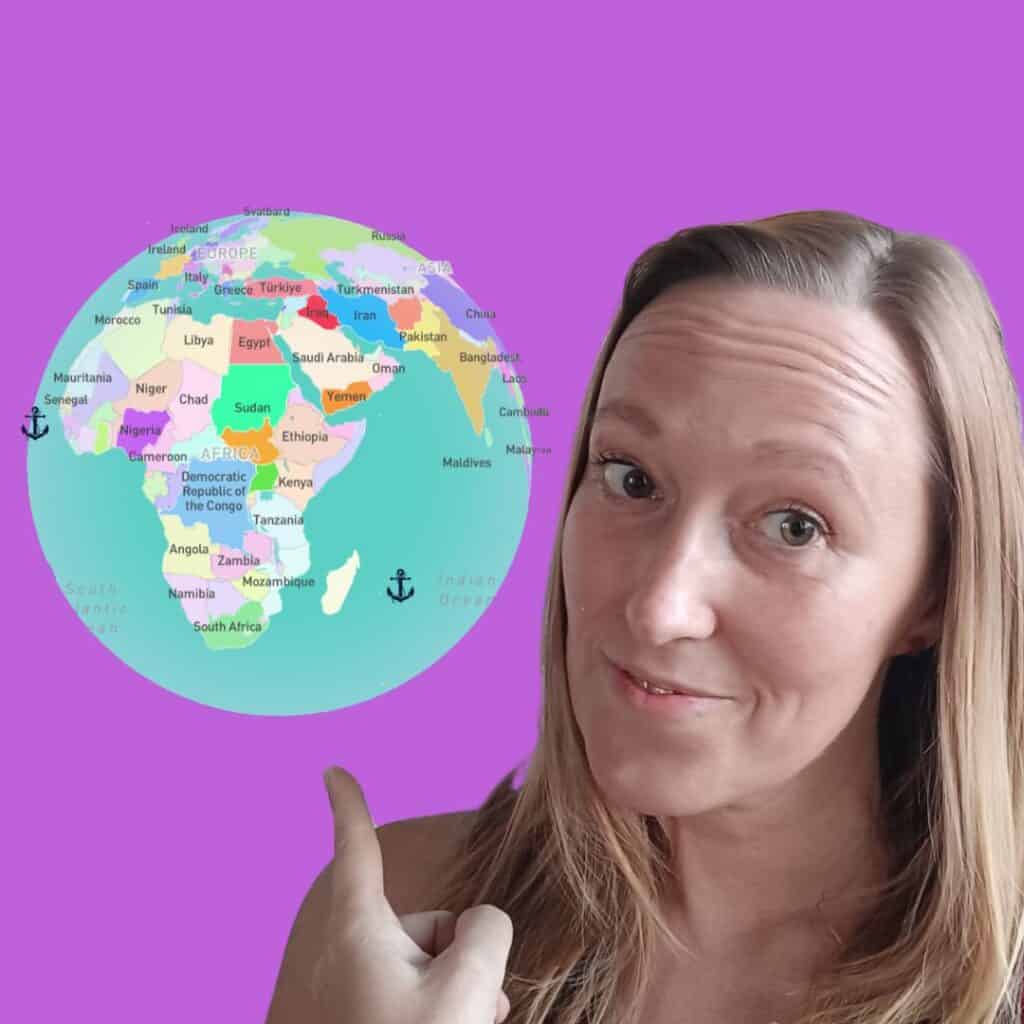
I’ve created an interactive Book Globe for readers who love exploring literature from around the world. All proceeds from my Book Globe go towards supporting refugees in Bangkok.
The Map Made of Stories
🌍 A clickable, interactive map where every country links to a book set there
📚 218+ books across 67+ countries, with more added regularly
🎥 Video recommendations to help you choose your next read
✨ A digital bookshelf that unfolds like a literary passport
💛 Every book personally read and recommended by Steffi from Books That Teach Us