One of my favourite things about reading historical fiction is discovering something about the world that I had absolutely no idea about. I love books that teach me about unfamiliar periods of history, particularly when they inspire me to go travelling and see the places I’ve read about.
I’ve put together 40 historical fiction books that will take us through time, starting in the ancient world and travelling through medieval Europe, the Tudor period, colonialism, the World Wars and right up to modern-day conflicts.
We’re going across every continent, from ancient India to seventeenth-century Norway, Ghana during the transatlantic slave trade, the industrial towns of Victorian England and the civil wars of Sri Lanka and Nigeria.
Every book on this list is one I’ve personally read and recommend. I’ve been a little flexible with the definition of historical fiction, particularly with the earliest books, where I’ve included mythology and historical fantasy.
Let’s travel through time!
1. The Palace of Illusions by Chitra Banerjee Divakaruni
Historical setting: Ancient India
I picked up The Palace of Illusions while travelling in India because I love reading books set in the places I’m exploring. I didn’t realise quite what I’d got myself into!
As I was reading, some rather unusual things started happening. When one of the characters developed blue skin, I started to realise that this was actually a retelling of a Hindu epic.
The story is told through the eyes of Draupadi, a woman who is said to have been born from fire. She marries five brothers and becomes caught up in the events leading to the legendary Kurukshetra War.
What I particularly loved was seeing this epic story from a woman’s perspective. It’s a feminist retelling of a traditionally male-dominated narrative, and it taught me so much about Hindu mythology and religion.
The Kurukshetra War is a subject of historical debate, although the events described in the epic cannot be treated as established history.
If you don’t mind some fantasy and mythology mixed into your historical fiction, this is a fascinating read.
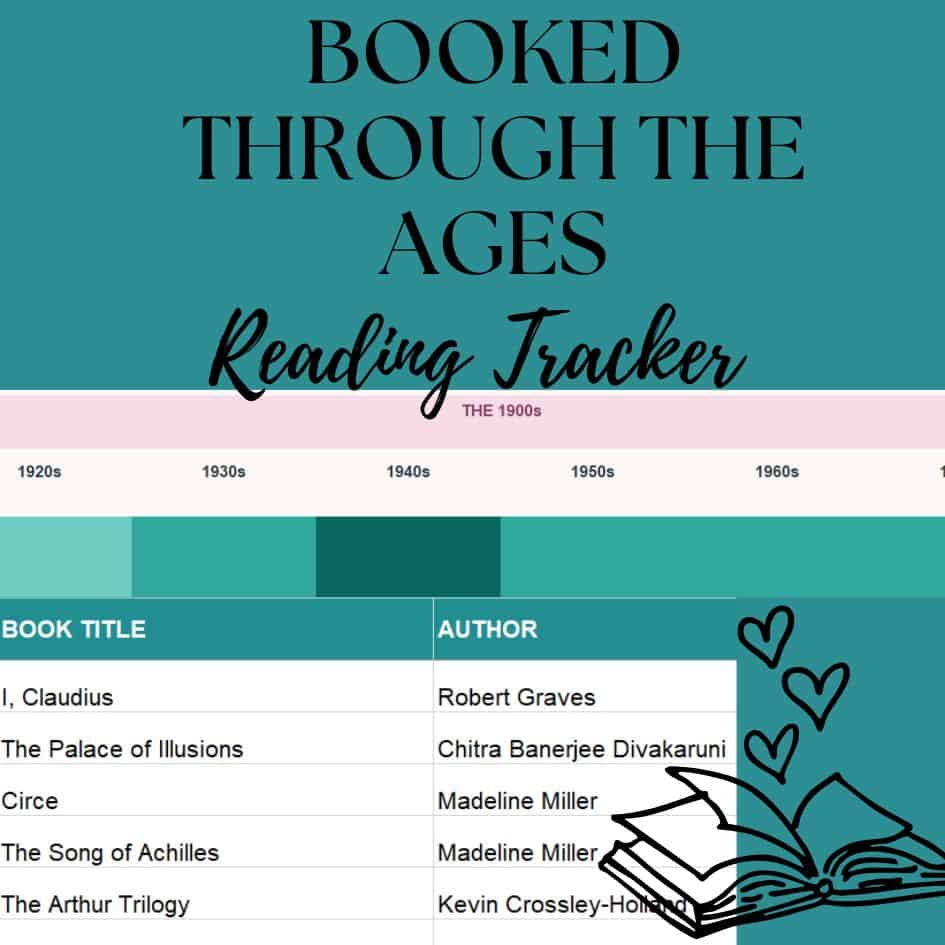
Track Your Historical Fiction Reading
Love reading through history? I’ve created a Historical Fiction Timeline Tracker to help you see which periods you’ve explored and discover the historical gaps in your reading.
Explore My Reading Resources2. Circe by Madeline Miller
Historical setting: Ancient Greek mythology
Another mythological book I absolutely loved is Circe by Madeline Miller.
Circe is a relatively minor goddess who discovers that her real powers lie in witchcraft and herbs. Eventually, she’s banished to an island, where she encounters several famous characters from Greek mythology, including Odysseus.
What I found fascinating was imagining the ancient sailors travelling between islands, setting out into unfamiliar waters and encountering things they couldn’t explain.
Of course, the gods and monsters belong to mythology rather than established history, but the stories reflect something of how ancient people understood their world.
Like The Palace of Illusions, what makes Circe special is that we’re hearing the story from a woman’s perspective rather than another male hero’s.
3. The Song of Achilles by Madeline Miller
Historical setting: The legendary Trojan War, traditionally dated around 1200 BCE
Another Madeline Miller recommendation, and this time we’re heading to the legendary Trojan War.
I absolutely loved The Song of Achilles because it’s essentially a beautiful love story against a backdrop of horrific violence and war.
It’s told from the perspective of Patroclus, Achilles’ lover, and explores their relationship as they become caught up in the conflict.
I thought Miller did an incredible job of weaving the Greek gods and mythology into a story that feels very human. I particularly loved the contrast between the tenderness of the central relationship and the brutality happening around them.
And I absolutely hated Agamemnon and Menelaus!
Although the historical reality behind the Trojan War remains debated, this is a wonderful way to explore the stories that ancient Greeks told about their past.
4. I, Claudius by Robert Graves
Historical setting: Ancient Rome, first century BCE to first century CE
I, Claudius was actually published in the 1930s, but it’s set during the early Roman Empire.
The story follows Claudius, a member of the imperial family, who narrates the political intrigues, scandals and power struggles surrounding his relatives.
What I particularly enjoyed was how it brought ancient Rome to life.
If you’ve ever visited Pompeii, Herculaneum or any other Roman archaeological sites, I really recommend this book. It makes you imagine the people who lived in those houses and walked through those streets thousands of years ago.
One of my favourite things about historical fiction is that connection between reading and travelling, and this book definitely gave me that.
5. The Arthur Trilogy by Kevin Crossley-Holland
Historical setting: Medieval Britain, around 1199–1200
I read this trilogy when I was a young teenager and absolutely loved it.
The first book is The Seeing Stone, which introduces Arthur, a boy who receives a magical stone from Merlin. Through the stone, he witnesses the legendary King Arthur’s adventures.
There are two parallel stories, one involving the young Arthur’s everyday life in medieval Britain and another following the famous Arthurian legends.
I remember being fascinated by the knights, castles, courts and customs of medieval life.
Although I haven’t reread these as an adult, they’ve stayed with me for years. They’re wonderful recommendations for younger readers interested in history, particularly if they enjoy some fantasy mixed in.
6. Labyrinth by Kate Mosse
Historical setting: Thirteenth-century France and the modern day
Labyrinth is one of the fattest books I’ve read, so it’s a great choice if you enjoy getting completely immersed in a long novel.
The story moves between two timelines. In medieval France, a young woman becomes involved in protecting a secret connected with the Holy Grail. In the modern day, another woman discovers skeletons and mysterious symbols that connect her to the past.
Much of the historical story takes place around Carcassonne in southern France.
I really enjoyed how the two timelines gradually came together, and it made me desperate to visit Carcassonne myself.
There’s history, mystery and a little supernatural intrigue. Definitely one for readers who don’t mind a long book.
7. Old Magic by Marianne Curley
Historical setting: Modern Australia and medieval England
Old Magic is one of my favourite books ever. I’ve even recently lent my copy to one of my students.
It’s a young adult novel featuring a little romance, magic and time travel.
The story begins in Australia, where a teenage girl discovers that a new boy in her community possesses unusual powers. Together, they travel back to medieval England in an attempt to break a curse on his family.
I loved all the descriptions of medieval castles, clothing and everyday life.
It made me think about how uncomfortable life must have been, from the scratchy clothing to the feudal system, where ordinary villagers worked to support wealthy lords.
I reread it recently and still found it a lovely, easy read.
If you’re looking for historical fantasy for a teenager, I really recommend this one.
8. The Forty Rules of Love by Elif Shafak
Historical setting: Thirteenth-century Anatolia and the modern day
I absolutely adore Elif Shafak, and The Forty Rules of Love is quite different from some of her other novels.
The historical storyline explores the relationship between the famous poet Rumi and Shams of Tabriz in thirteenth-century Anatolia, in what is now Turkey.
Alongside this, there’s a modern-day storyline about an unhappy married woman who begins questioning her life.
Before reading this book, I knew very little about Rumi beyond seeing quotes attributed to him.
I learnt so much about Islamic culture, Sufism and religious ideas circulating at the time.
Compared with some of Shafak’s heavier books, I found this one quite beautiful and uplifting. It’s a wonderful introduction to a period of history I previously knew almost nothing about.
9. Wolf Hall by Hilary Mantel
Historical setting: Tudor England, sixteenth century
I’ve read all three books in Hilary Mantel’s Wolf Hall trilogy and really enjoyed them, although I wouldn’t describe them as easy reads.
Mantel’s writing demands concentration. Sometimes I had to stop and work out whether somebody was speaking or thinking.
The story follows Thomas Cromwell, who rises from a difficult working-class childhood to become one of King Henry VIII’s most important advisers.
Through his eyes, we experience the political intrigues of the Tudor court, Henry VIII’s marriages and the English Reformation.
This was a period when England broke with the authority of the Pope, leading to enormous religious and political upheaval.
I already love Tudor history, so I found the books fascinating. I particularly enjoyed seeing events from Cromwell’s perspective rather than focusing entirely on Henry VIII and his wives.
10. By Any Other Name by Jodi Picoult
Historical setting: Elizabethan England and the modern day
This is one of the most intriguing historical fiction books I’ve read recently.
By Any Other Name questions whether William Shakespeare actually wrote all the plays attributed to him.
Jodi Picoult explores the controversial theory that the real author of some of these plays may have been a woman, specifically the Elizabethan poet Emilia Bassano.
I studied English literature at university, and I remember discussing Shakespeare authorship theories during lectures.
After reading this book, I was almost completely convinced by Picoult’s argument!
Of course, this remains a disputed theory rather than established historical fact. The overwhelming scholarly consensus continues to attribute Shakespeare’s plays to Shakespeare.
What fascinated me most was the question of women’s education and authorship. Women faced enormous barriers to becoming recognised writers, and the novel raises interesting questions about whose work survives under whose name.
The novel has a modern-day storyline alongside Emilia’s story, but I actually found the historical sections far more interesting.
I almost wished the entire book had been about Emilia Bassano.
11. Hamnet by Maggie O’Farrell
Historical setting: Elizabethan England, late sixteenth century
Another novel connected with Shakespeare, but this time we’re focusing on his family.
Hamnet explores the life of Shakespeare’s wife, Agnes, and their children, particularly their son Hamnet.
It’s a deeply emotional story about family, love and grief.
I was particularly interested in Agnes and her relationship with nature and herbal medicine, as well as the everyday experiences of families living in Elizabethan England.
There are also references to the constant threat of disease and epidemics.
It made me think about how vulnerable people were to illness, particularly when they didn’t have the resources to escape an outbreak.
This is a beautiful but very sad novel, and a fascinating perspective on a famous historical family.
12. Don Quixote by Miguel de Cervantes
Historical setting: Early seventeenth-century Spain
Don Quixote is one of those classics that everybody has heard of, but I wonder how many people have actually read.
I read it quite a long time ago, so I probably need to revisit it to refresh my memory.
The central character becomes convinced that he’s a knight and starts interpreting ordinary situations as heroic adventures.
Most famously, he attacks windmills because he imagines they’re giants.
What interested me was the contrast between ideals and reality, particularly the romanticised world of medieval knights and chivalry.
Strictly speaking, it’s not historical fiction in the modern sense because Cervantes was writing about his own period, but it’s a fascinating window into Spanish society and the ideas circulating at the time.
13. The Mercies by Kiran Millwood Hargrave
Historical setting: Norway, 1617
The Mercies is one of my favourite historical fiction books, and it’s also one that completely surprised me.
When I read the description, I thought it was going to be about a group of women coming together after a terrible storm killed the men in their community.
It isn’t really that story at all.
It’s about witch trials.
The novel is inspired by real events in Vardø, Norway, where a devastating storm killed many fishermen and women were subsequently accused of witchcraft.
A witch hunter arrives, bringing his wife, and the story becomes increasingly terrifying.
What made me so angry was how the accusations were used to control and persecute women, particularly those who showed independence.
It’s brutal, heartbreaking and incredibly powerful.
If you’ve heard about the Salem witch trials but know little about European witch trials, I really recommend this book.
14. The Leviathan by Rosie Andrews
Historical setting: England, 1643
The Leviathan is a really unusual book.
My friend Kylie bought it for my birthday, and I don’t think either of us knew quite how strange it was going to be!
It’s set during the English Civil War and mixes historical fiction with folklore, witchcraft and supernatural elements.
There are accusations of witchcraft and some unusual shifts between different periods.
It’s one of those books where I reached the ending and still had questions about what had happened.
But if you enjoy quirky historical fiction with a dark, witchy atmosphere, this might be for you.
15. Homegoing by Yaa Gyasi
Historical setting: Ghana and the United States, eighteenth century to modern day
Homegoing is possibly the best book I’ve read in the last year.
It absolutely broke me.
I genuinely think this is a book everybody should read at some point because so much of the history it explores continues to shape the modern world.
The story begins in eighteenth-century West Africa with two half-sisters whose lives take completely different directions.
One remains in what is now Ghana, while the other is sold into slavery and transported across the Atlantic.
From there, the novel follows successive generations of both families through centuries of history.
We learn about the transatlantic slave trade, West African kingdoms, slavery in America, racial violence and the long-term consequences of these systems.
I particularly enjoyed learning about the Fante and Asante peoples and the complex political relationships between different communities in West Africa.
Each chapter follows a new generation, almost like a collection of interconnected short stories.
Normally, I’m not a huge fan of short stories, but this structure worked beautifully.
There are some incredibly disturbing scenes involving violence and sexual assault, so I would recommend reading it when you’re feeling emotionally prepared.
It’s magnificent, but absolutely heartbreaking.
16. Vanity Fair by William Makepeace Thackeray
Historical setting: Early nineteenth-century Britain and the Napoleonic Wars
After Homegoing, we need something a little lighter!
I really enjoyed Vanity Fair for the sheer scandalousness of it.
The main character, Becky Sharp, is ambitious, manipulative and frequently awful. But somehow, I still wanted her to succeed.
She’s determined to climb the social ladder in a society where women have very limited opportunities to gain financial independence.
The story unfolds against the backdrop of the Napoleonic Wars, including the Battle of Waterloo.
What I found interesting was how much women’s futures depended on marrying well, particularly if they didn’t come from wealthy families.
Becky might be a terrible person in many ways, but the odds are stacked against her.
It’s a wonderfully entertaining classic about class, ambition and British society.
17. Sea of Poppies by Amitav Ghosh
Historical setting: India, 1838
Sea of Poppies taught me so much about British colonial rule in India and the opium trade.
It follows several characters from different backgrounds whose lives become connected through the trade in opium and the colonial economy.
I learnt about how agricultural production was shaped by British commercial interests, including the cultivation of opium instead of crops for local consumption.
One of the most interesting aspects is how the novel explores the economic pressures that could push people into desperate situations.
Eventually, several characters find themselves aboard a former slave ship, now transporting indentured labourers towards Mauritius.
It’s a fascinating look at the relationship between colonialism, trade and forced or exploitative labour.
I still need to read the next book in the trilogy!
Track Your Historical Fiction Reading
Love reading through history? I’ve created a Historical Fiction Timeline Tracker to help you see which periods you’ve explored and discover the historical gaps in your reading.
Explore My Reading Resources18. North and South by Elizabeth Gaskell
Historical setting: Industrial England, 1850s
I studied North and South at university and even wrote essays about it, so this is a book I know particularly well.
It’s set during the enormous social changes of industrialisation in Victorian England.
The main character, Margaret Hale, moves from the rural south of England to an industrial town in the north.
There, she encounters factories, mill owners, working-class families and growing tensions over working conditions.
Eventually, these tensions lead to a workers’ strike.
What I find particularly interesting is the way the novel explores class differences and the attitudes of wealthy industrialists towards their workers.
There’s also a wider historical connection between Britain’s industrial economy and the products of enslaved labour, particularly cotton produced on plantations in the Americas.
It’s a wonderful novel for anyone interested in Victorian society, workers’ rights and the Industrial Revolution.
19. Fingersmith by Sarah Waters
Historical setting: Victorian England, 1860s
I read Fingersmith quite a long time ago, but it’s stayed with me.
It’s a wonderfully scandalous Victorian novel involving deception, fraud and a plot to take control of a wealthy woman’s fortune.
One of the things that made it particularly memorable was its exploration of a relationship between two women in Victorian society.
It also explores the terrifying reality of nineteenth-century asylums, where people could be institutionalised against their wishes.
Women were especially vulnerable to systems where husbands and other male relatives held considerable legal and social power.
It’s full of twists, so I don’t want to spoil the plot, but it’s a fascinating look at power, sexuality and the restrictions placed on women.
20. The Far Pavilions by M. M. Kaye
Historical setting: British colonial India, nineteenth century
The Far Pavilions is one of my favourite books of all time.
I’ve read it more than once, and it’s also one of the books that made me want to travel around India.
It follows Ashton, a British boy raised in India, whose life becomes caught between different cultures, identities and loyalties.
There’s romance, adventure, political intrigue and an enormous amount of history.
The novel explores the aftermath of the Indian Rebellion of 1857, relationships between British colonial officials and Indian rulers, and later military events in Afghanistan.
One part that particularly affected me involved the historical practice of sati, in which some widows were expected or pressured to die on their husbands’ funeral pyres.
When I later travelled through India, I saw memorial handprints associated with sati, and it was an incredibly emotional experience because I’d read about the practice in this book.
I also visited the Hawa Mahal in Jaipur, which made me feel even more connected to the places described in the novel.
If you enjoy enormous historical sagas with romance and adventure, this is an incredible read.
21. The Glass Palace by Amitav Ghosh
Historical setting: Burma, India and Malaya, late nineteenth century to World War II
The Glass Palace is another enormous historical novel that covers several generations and countries.
It begins around the British conquest of Burma and the removal of the Burmese royal family from power.
From there, it moves between Burma, India and Malaya, exploring colonialism, trade, family relationships and political change.
I learnt about the teak industry, colonial businesses and the economic systems that developed under British rule.
The novel eventually reaches World War II, so it covers an enormous amount of history.
Like several of Amitav Ghosh’s books, there are lots of characters, so it’s one where I needed to concentrate to remember how everybody was connected.
But it’s a fantastic choice if you want to understand how several Asian countries were shaped by colonialism.
22. The Covenant of Water by Abraham Verghese
Historical setting: Kerala, India, 1900s–1970s
The Covenant of Water is another enormous book, and one that spans several generations of a family in Kerala.
The story begins with a young girl being married to a much older man, which immediately made me uncomfortable.
But the novel develops into something much bigger and more complex.
It follows different members of the family across decades, exploring love, loss, medicine and the changing world around them.
One particularly interesting aspect is how much I learnt about medical treatment and the history of leprosy.
There are also some fascinating characters working in medicine and helping people with conditions that were poorly understood or heavily stigmatised.
It’s a beautiful but sometimes devastating novel, with a few scenes that are very difficult to read.
If you enjoy long multigenerational stories set in India, this is one to add to your list.
23. The Buddha in the Attic by Julie Otsuka
Historical setting: United States, early twentieth century to the 1940s
The Buddha in the Attic is unlike almost anything else I’ve read.
It tells the story of Japanese women who travelled to the United States to marry Japanese men they had often only seen in photographs.
They became known as picture brides.
Some women were excited to begin new lives, while others were frightened or had little choice in the matter.
What makes the book so unusual is its narration. Rather than following one main character, the story is told collectively, using ‘we’.
We experience the women’s journeys, marriages, working lives and attempts to establish themselves in American society.
The novel eventually reaches the forced incarceration of Japanese Americans during World War II.
It’s a relatively short book, but incredibly powerful, particularly because it gives a collective voice to women whose individual experiences were often overlooked.
24. Saigon by Anthony Grey
Historical setting: Vietnam, 1925–1975
Saigon is a fantastic historical saga covering around fifty years of Vietnamese history.
It follows characters from American, French and Vietnamese families as their lives become caught up in the country’s political changes.
We learn about French colonial rule, the Vietnamese independence movement, communism and eventually the Vietnam War.
I particularly enjoyed seeing the conflict through several different perspectives rather than focusing entirely on American involvement.
Anthony Grey was a journalist, which I think gives the novel an interesting approach to historical events.
I love multigenerational historical fiction, and this is a wonderful example of how following families across decades can help us understand complicated political events.
25. The Book Woman of Troublesome Creek by Kim Michele Richardson
Historical setting: Kentucky, United States, 1930s
I picked this up randomly in the library and absolutely loved it.
It taught me about two incredibly unusual pieces of American history.
The first was the Pack Horse Library Project, which employed women to deliver books to isolated communities in rural Kentucky during the Great Depression.
These women travelled through difficult mountain terrain, sometimes in terrible weather, to bring reading materials to people who had very limited access to books.
I thought this was absolutely incredible.
The second thing I learnt about was even more surprising.
The main character has blue skin, which initially made me wonder whether I’d accidentally picked up a fantasy novel.
But it was inspired by a real genetic condition called methemoglobinemia, associated with the so-called Blue Fugates of Kentucky.
The novel combines these unusual historical details with a powerful story about prejudice, poverty and life in Appalachia.
It’s heartbreaking in places, but one of the most memorable books on this list.
26. The Gift of Rain by Tan Twan Eng
Historical setting: Penang, Malaysia, during World War II
I really enjoyed The Gift of Rain, partly because I’ve visited Penang several times.
The main character has both British and Chinese heritage and develops a close relationship with a Japanese man who becomes his teacher.
But when Japan invades Malaya during World War II, their relationship becomes enormously complicated.
The story explores loyalty, friendship and the terrible choices people face during war.
I particularly loved recognising places in Penang, including the fort and Penang Hill.
Growing up in England, most of what I learnt about World War II focused on Europe.
Books like this have been incredibly important in helping me understand what was happening in other parts of the world during the same period.
27. The Wind Knows My Name by Isabel Allende
Historical setting: Europe, the Americas and several periods from 1938 onwards
The Wind Knows My Name begins in Europe in 1938, following a Jewish child whose family is threatened by Nazi persecution.
At first, I thought this was going to be another novel centred entirely on World War II.
But it moves across countries and decades, bringing together different stories of displacement and persecution.
We learn about the Kindertransport, which helped Jewish children escape Nazi-controlled territories, and later about children separated from their families at the US–Mexico border.
I hadn’t expected the story to move as far forward as the COVID pandemic.
What connects everything is the experience of refugees, particularly children, and the enormous consequences of being separated from family.
It’s a moving novel that shows how displacement and persecution have continued throughout modern history.
28. Alone in Berlin by Hans Fallada
Historical setting: Germany, 1940s
Alone in Berlin is based on the real experiences of a German couple who resisted the Nazi regime.
Rather than carrying out dramatic attacks, they leave small handwritten postcards containing anti-Nazi messages around Berlin.
These acts of resistance might seem small, but they were incredibly dangerous.
The novel follows their activities and the authorities trying to track them down.
There are moments when it feels almost like a thriller, but it’s also deeply emotional because we know ordinary people really did take these risks.
My edition included an image of a real postcard from the historical case.
I don’t know why, but seeing the actual handwriting of people from history always affects me.
It’s a powerful reminder that resistance doesn’t always involve weapons or large organisations. Sometimes it’s simply refusing to remain silent.
29. The Four Books by Yan Lianke
Historical setting: China during the Great Leap Forward, late 1950s to early 1960s
The Four Books is one of the most disturbing novels I’ve read.
It’s set in a labour camp during China’s Great Leap Forward, a period associated with enormous political upheaval and catastrophic famine.
The characters aren’t referred to by ordinary names but by labels such as Scholar, Author and Musician.
These educated people are forced into agricultural labour, despite having very little farming experience.
As conditions deteriorate, the novel becomes increasingly horrific.
There are scenes of starvation and desperate attempts to survive that have stayed with me long after reading it.
It’s an unusual book stylistically and a very difficult one emotionally, but it introduced me to a period of Chinese history that I wanted to learn much more about.
30. The Poisonwood Bible by Barbara Kingsolver
Historical setting: Congo, beginning in 1959
I absolutely love Barbara Kingsolver, and The Poisonwood Bible is another incredible novel.
It follows an American missionary family who move to the Congo shortly before independence from Belgian colonial rule.
The father, Nathan, is a fanatical missionary determined to impose his religious beliefs on the local community.
He made me absolutely furious.
The story explores missionary work, colonialism and the political upheaval surrounding Congolese independence.
I learnt about the assassination of Patrice Lumumba and the instability that followed, alongside the experiences of ordinary families.
What interested me most was the question of what it means to ‘help’ people who haven’t asked for your help, particularly when you’re unwilling to understand their culture or needs.
It’s a powerful story about religion, colonial attitudes and the consequences of believing your own way of life is superior.
31. Half of a Yellow Sun by Chimamanda Ngozi Adichie
Historical setting: Nigeria, 1960s and the Biafran War
I knew very little about the Biafran War before reading Half of a Yellow Sun.
Set in Nigeria during the 1960s, it explores the period following independence from Britain and the civil war that divided the country.
The novel follows several interconnected characters, including twin sisters, whose lives become caught up in the conflict.
We learn about class, ethnicity, political divisions and the devastating humanitarian consequences of the war.
One of the most shocking aspects was learning about the famine that affected the region.
It’s incredibly upsetting in places, but I was grateful that the book introduced me to such an important piece of relatively recent history.
If you enjoy historical fiction that explores unfamiliar conflicts, I really recommend it.
32. The House of the Mosque by Kader Abdolah
Historical setting: Iran, late 1960s to 1980s
The House of the Mosque follows an Iranian family across a period of enormous political and religious change.
The story centres on a family connected to a mosque as Iran moves from the rule of the Shah through the 1979 revolution and into the Islamic Republic.
Different generations respond to these changes in different ways.
Some are deeply religious and conservative, while younger family members embrace different political and social ideas.
What I particularly appreciated was how the novel helped me understand characters whose beliefs I didn’t necessarily agree with.
Some older characters feel that the country they knew is disappearing, while younger people want a completely different future.
It’s a fascinating way to understand political change through the tensions within one family.
33. We Are All Birds of Uganda by Hafsa Zayyan
Historical setting: Uganda and Britain, 1970s onwards
We Are All Birds of Uganda introduced me to more of the history of Ugandan Asians.
During British colonial rule, people from India moved to East Africa, establishing families and communities that became part of the region’s society.
In 1972, Uganda’s dictator Idi Amin ordered the expulsion of many Ugandans of Asian descent.
The novel follows a family whose history has been shaped by these migrations and displacements.
It moves between different generations and countries, exploring identity, belonging and family expectations.
What I found particularly interesting was the question of where you belong when your family has been forced to move between countries over several generations.
I did find the ending a little unsatisfying, but it taught me about a part of British and Ugandan history that I hadn’t previously explored in much detail.
34. The Island of Missing Trees by Elif Shafak
Historical setting: Cyprus in the 1970s and London decades later
This might be my favourite Elif Shafak novel so far.
The Island of Missing Trees is a beautiful, heartbreaking love story set against the political division of Cyprus.
It follows two young people from Greek Cypriot and Turkish Cypriot communities whose relationship becomes complicated by conflict and hostility between their communities.
One of the most unusual features of the novel is that some chapters are narrated by a tree.
I know that sounds completely bonkers, but it really works!
A cutting from a tree in Cyprus is eventually planted in London, connecting the past with a later generation.
The story moves between timelines, gradually revealing what happened to the characters and how the conflict shaped their lives.
I learnt so much about the history of Cyprus and the divisions that continue to affect the island.
It’s beautifully written, unusual and incredibly moving.
35. Mosquito by Roma Tearne
Historical setting: Sri Lanka during the civil war
Mosquito is another historical novel where a love story is shaped by political conflict.
Set during Sri Lanka’s civil war, it explores the tensions between communities and the dangers faced by people whose relationships cross those divisions.
There are some extremely disturbing scenes involving violence and torture, so be prepared for a difficult read.
What I particularly appreciated was how it helped me understand something of the fear and uncertainty experienced by people living through the conflict.
It also gave me more insight into why so many Sri Lankans fled their country and settled elsewhere, including in the UK.
It’s another example of historical fiction making a complicated political conflict feel deeply personal.
36. A Long Walk to Water by Linda Sue Park
Historical setting: Sudan and South Sudan, beginning in 1985
A Long Walk to Water is a short, accessible novel that combines fictional storytelling with the real experiences of Salva Dut.
Salva was a child when he fled violence in Sudan and became one of the Lost Boys of Sudan.
The book follows his dangerous journey as a refugee and explores the difficulties faced by children forced to leave their homes.
There’s also a parallel story exploring the challenges of accessing clean water.
Later, we learn about Salva’s work establishing an organisation to help communities access safe drinking water.
Although it’s written for younger readers, I think it’s a really eye-opening book for adults as well.
It’s short, powerful and introduces readers to important issues surrounding conflict, displacement and access to basic resources.
37. Small Things Like These by Claire Keegan
Historical setting: Ireland, 1985
If you’re looking for a very short historical fiction book, I really recommend Small Things Like These.
The story follows Bill, a coal merchant working in a small Irish community.
During his deliveries, he encounters something disturbing at a religious institution.
The novel explores the historical reality of Ireland’s Magdalene laundries, where women and girls were confined and subjected to exploitative conditions.
One of the things I found most powerful was how much of the story is left unsaid.
The characters don’t openly discuss what is happening, and readers have to piece together the truth from small details.
That silence reflects something of the wider society’s failure to confront the abuse taking place.
It’s incredibly moving, particularly considering how short it is.
38. The Promise by Damon Galgut
Historical setting: South Africa, 1980s onwards
The Promise follows a white South African family across the final years of apartheid and into the post-apartheid period.
The central story concerns a promise made by the family’s mother to give a piece of land to Salome, a Black woman who works for the family.
But the promise is repeatedly ignored.
What makes the novel so interesting is that many of the characters are deeply unlikeable.
I found myself becoming increasingly frustrated with them, particularly because Salome had helped raise the family’s children.
But I think that frustration is part of what makes the novel so effective.
The family’s failure to honour its promise reflects wider questions about land, inequality and the promises made during South Africa’s transition away from apartheid.
It’s a fascinating book about injustice and the gap between promising change and actually delivering it.
39. The Seven Moons of Maali Almeida by Shehan Karunatilaka
Historical setting: Sri Lanka, 1990
The Seven Moons of Maali Almeida is one of the quirkiest novels I’ve ever read.
The narrator is dead.
He doesn’t know exactly how he died, and he has to investigate his own death from the afterlife.
It’s a wonderfully strange premise, and the supernatural elements are woven into a story about political violence and disappearances during Sri Lanka’s civil war.
The narrator moves between different places, observing the living world while trying to discover what happened to him.
I enjoyed the unusual approach to the afterlife and the way the novel brings in elements of Sri Lankan beliefs and culture.
It’s funny, strange, dark and very different from most historical fiction.
If you enjoy unusual narrators and don’t mind some supernatural storytelling, I really recommend it.
40. The Beekeeper of Aleppo by Christy Lefteri
Historical setting: Syria and Europe, 2010s
The final book on my journey through history is The Beekeeper of Aleppo.
It’s a heartbreaking novel following a married couple who flee Syria during the civil war.
They travel through Europe in search of safety, encountering enormous difficulties along the way.
One of the things that affected me most was the idea that escaping a war doesn’t necessarily mean you’re safe.
People fleeing conflict often face further dangers, uncertainty and trauma during their journeys.
I read this book alone during COVID quarantine, which I really wouldn’t recommend!
It’s such an emotional book that I think you need some human connection afterwards.
There’s also a major revelation towards the end that I didn’t see coming, and it made the story even more heartbreaking.
If you want to understand something of the experiences of refugees fleeing modern conflicts, this is an incredibly moving novel.
Which Historical Fiction Book Should You Read First?
There are so many incredible books here, and choosing a favourite is almost impossible.
If you’re looking for an emotionally powerful story spanning generations, I’d start with Homegoing by Yaa Gyasi. It’s one of the best books I’ve read, although it’s definitely not an easy one emotionally.
If you enjoy discovering unusual pieces of history, The Book Woman of Troublesome Creek is a fantastic choice. I had absolutely no idea about the Pack Horse Library Project or the Blue Fugates of Kentucky before reading it.
For readers who love enormous historical sagas, I’d recommend The Far Pavilions, The Covenant of Water or The Glass Palace.
And if you want something short but incredibly powerful, Small Things Like These or The Buddha in the Attic would be wonderful choices.
What I love most about historical fiction is that it makes history feel personal. Instead of learning only dates, political events and the names of famous rulers, we experience history through the lives of ordinary people.
These are the stories that make me want to research a subject further, learn about a country I’ve never visited or travel somewhere new.
And that’s exactly why I love books that teach us something about the world.
Booked Through The Ages
Track your books, watch your timeline fill with colour and discover time periods you have read…and want to read next!
📚 Your Own Colourful Timeline
📖 Easy to Use Book Tracker
📊 Fun Reading Stats
Secure payment made with Stripe/Google/Apple Pay via Payhip